In This Article
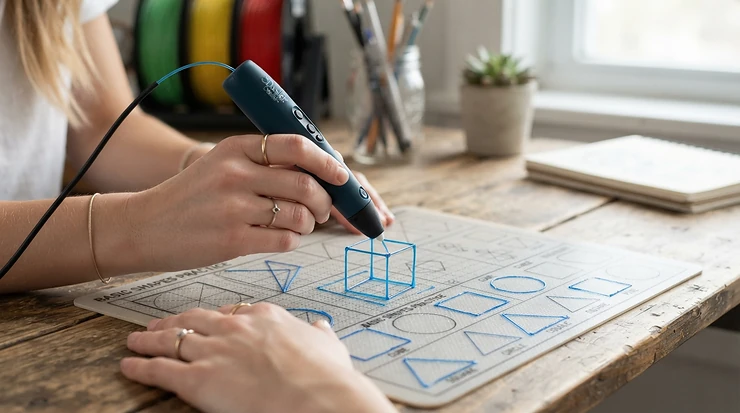
Here’s the thing nobody tells you when you unwrap a child’s 3D pen: the pen is the cheap bit. The plastic is the running cost. Within a fortnight of the birthday party, the starter strands are a tangle of half-used rainbow stubs, and you’re on the hunt for PCL filament refills for 3D pens that won’t clog the nozzle, won’t void the pen’s compatibility, and won’t empty your wallet.
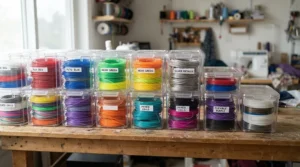
It’s a trickier shopping job than it looks. Filament diameters differ (2.5mm for some pens, 1.75mm for others), “compatible with” claims range from reliable to wishful, and some listings quietly mix up PCL, PLA and ABS. PCL, or polycaprolactone, is a biodegradable polyester that, according to Wikipedia’s entry on polycaprolactone, melts at roughly 60 °C. That is why it suits children’s pens.
This guide is built on spec-sheet analysis and aggregated review sentiment, not on hands-on testing. I looked at seven real products: five PCL options and two ABS alternatives for older makers. Along the way I cover low-temperature filament, child safety, filament shelf life, and where the cheapest 3D pen filament refills actually save money. Prices are shown as ranges only, so check the live listing before you buy.
Quick Comparison: PCL Filament Refills for 3D Pens at a Glance
| Product | Material | Diameter | Pack (approx.) | Pen compatibility | Best For |
|---|---|---|---|---|---|
| 3Doodler Start+ Eco-Filament Refills | PCL | 2.5mm | 75–500 strands (varies by pack) | 3Doodler Start / Start+ | Guaranteed fit, ages 6+ |
| Logiim PCL 2.5mm Refill Packs | PCL | 2.5mm | 130–320 strands | Advertised for Start+ | Colour variety on a budget |
| MIKA3D 12-Colour PCL Strands | PCL | 2.5mm | 60 strands (900cm) | Advertised for Start / Start+ | Small top-up or trial |
| myFirst 3D Pen Make PCL Refills | PCL | 1.75mm | 5 × 5m strands per pack | myFirst 3D Pen Make only | Owners of that pen |
| PRINTOXE PCL 1.75mm 10-Colour Pack | PCL | 1.75mm | 100m in 20 sealed bags | 1.75mm low-temp pens | Long-lasting value pack |
| MIKA3D 24-Colour ABS Refills | ABS | 1.75mm | 24 colours × 3.5m | MYNT3D / SCRIB3D-type pens | Teens and adults |
| Uxcell 40-Colour ABS Refills | ABS | 1.75mm | 40 colours × 5m | Most 1.75mm ABS pens | Maximum colour choice |
Read the table by diameter first and brand second. The two 2.5mm families only suit Start-type pens, and the 1.75mm PCL packs only suit pens built for low-temperature 1.75mm filament. The 3Doodler Start+ Eco-Filament Refills carry the lowest compatibility risk but are the most expensive per strand. The Logiim PCL 2.5mm Refill Packs and MIKA3D 12-Colour PCL Strands trade a little certainty for a lower bill. Both MIKA3D 24-Colour ABS Refills and Uxcell 40-Colour ABS Refills are for hotter pens, so keep them away from younger children.
💬 Just one click — help others make better buying decisions too!😊
Top 7 PCL Filament Refills for 3D Pens: Expert Analysis
Indicative price bands below reflect European and UK retailer listings at the time of research. Prices vary, so check the current price on amazon.co.uk.
1. 3Doodler Start+ Eco-Filament Refills — the safest guaranteed fit
The official refills are the only option designed by the pen’s own maker, which is the whole point. Retailer listings describe them as 100% PCL, BPA-free, non-toxic and aimed at ages 6+. Strands are 15cm long and 2.5mm thick, and each one stretches into a much longer doodle. One retailer cites up to ten times its length, while Costco’s listing is more conservative at around six times, so expect roughly 0.9–1.5 metres per strand depending on technique.
The 2.5mm diameter is proprietary in practice, so these strands fit Start and Start+ pens and little else. Parent-focused roundups report smooth flow without clogging, though they flag the lock-in to one ecosystem. If you want the least fuss, this is the answer. If you want the cheapest metre of plastic, it isn’t.
One caution on specs: some retailers quote a 35–40°C melt point, others around 70°C. PCL itself melts near 60°C, so treat pen-specific figures as approximate and rely on the manufacturer’s guidance.
Pros:
- ✅ Designed by the pen maker for guaranteed fit
- ✅ Wide pack choice from 75 to 500 strands
- ✅ Positioned as BPA-free and child-friendly
Cons:
- ❌ Highest cost per strand in this round-up
- ❌ Locks you into the 3Doodler ecosystem
Indicative price: roughly £15–£20 for 75 strands and £35–£45 for 250. Good value for peace of mind, and a premium for what is a simple polymer.
2. Logiim PCL 2.5mm Refill Packs — biggest colour variety for Start+ owners
Logiim sells multiple pack sizes on Amazon: 130 strands in 26 colours, 160 in 32 colours, and a 320-strand pack in 32 colours with ten 15cm strands per colour (4,800cm in total). All are 2.5mm PCL and advertised as compatible with the 3Doodler Start+.
Colour spread is where this brand shines. A pack that gives a child 32 shades means two-tone dragons and gradient rainbows instead of the usual red, blue, yellow routine. For a classroom or a family with three artists, the bulk size matters more than any single spec.
The caveat is that “compatible with” is the seller’s claim. In my research I couldn’t verify a sizeable independent review pool for these specific listings. Before committing to the 320-pack, buy a small one and run it through your pen. Reviewers on third-party PCL generally comment on fit and flow, so read recent verified-purchase reviews for jams.
Pros:
- ✅ Up to 32 colours per pack
- ✅ Large bulk option suits families and classrooms
- ✅ Matches the 2.5mm Start+ strand diameter
Cons:
- ❌ Compatibility is a seller claim
- ❌ Independent review depth not verified
Indicative price: budget tier; check the live listing. Strong value if fit holds, which is why you should test a small pack first.
3. MIKA3D 12-Colour PCL Strands — the low-risk top-up sampler
The MIKA3D pack contains 60 strands (12 colours × five 15cm strands, 900cm total), made for the Start+ and, per the listing, “only fit for 3Doodler Start”. That small size is both its weakness and its charm.
For a child who has run out of blue mid-project, a 60-strand top-up is a gentler outlay than a 250-strand commitment. It is also a low-stakes way to test third-party fit before buying bigger. The 12 basic colours cover the essentials rather than the fancy shades.
The flip side is cost per metre. Smaller third-party packs often lose their price advantage because you are paying for packaging and postage over fewer strands. If you go through filament quickly, the 130- or 320-strand Logiim packs make more arithmetical sense. For occasional doodlers, this one is perfectly sensible.
Pros:
- ✅ Small, low-commitment pack
- ✅ Twelve essential colours
- ✅ Good for testing third-party fit
Cons:
- ❌ Only 900cm of raw strand
- ❌ Costlier per metre than bulk packs
Indicative price: budget tier; check the current price. Fair value as a sampler, weak as a bulk buy.
4. myFirst 3D Pen Make PCL Refills — purpose-built for the myFirst pen
These 1.75mm PCL refills are made exclusively for HP’s myFirst 3D Pen Make. UK retailer Learning SPACE lists a pack of five 5-metre filaments in cold or warm colour sets. A European listing describes the pen as low-heat with rapid solidification and PCL formulated for “kid-safe” use.
At five metres per strand, it is a different animal from the 15cm Start+ sticks. A 1.75mm roll feeds continuously, so there’s less stopping to reload mid-drawing. The trade-off is exclusivity: use it only with the myFirst Make, not other 1.75mm pens.
Learning SPACE listed a pack at around £18 incl. VAT. I could not confirm current Amazon UK availability, so check amazon.co.uk or the retailer before relying on it. I also couldn’t verify a large review pool for the refills themselves.
Pros:
- ✅ Long 5-metre continuous strands
- ✅ Marketed for low-heat child-friendly use
- ✅ Matched to the pen’s feed system
Cons:
- ❌ Works only with myFirst 3D Pen Make
- ❌ Only five strands per pack
Indicative price: roughly £15–£20 per pack. Reasonable if you own the pen, pointless if you don’t.
5. PRINTOXE PCL 1.75mm 10-Colour Pack — long-lasting value in sealed bags
This pack gives you 100 metres of 1.75mm PCL in ten colours, each colour split into two sealed 5-metre bags (20 bags in the box). The seller’s description calls the filament food-grade PCL and says it is for 3D pens only.
The sealed-bag design is the clever part. You open one 5-metre bag at a time and the rest stays protected, which helps with filament shelf life. At 100 metres in total, this is the largest single volume of PCL in this round-up.
Be careful on compatibility, though. 1.75mm is only a diameter, not a guarantee of fit. Check that your pen is rated for low-temperature PCL and that the nozzle and feed handle 1.75mm strands. The listing I found was on a Canadian marketplace, so confirm UK availability. I couldn’t verify a UK review pool for this pack.
Pros:
- ✅ 100 metres total in sealed 5-metre bags
- ✅ Ten colours, two bags each
- ✅ Bags help preserve unopened filament
Cons:
- ❌ Pen compatibility must be checked
- ❌ UK availability and reviews unverified
Indicative price: mid-budget; check the current price. The best volume-per-pound in the 1.75mm PCL group if it fits.
6. MIKA3D 24-Colour ABS Refills — for MYNT3D and SCRIB3D-style pens
Moving to ABS: this 1.75mm pack offers 24 colours at 3.5 metres each (84 metres in total, although another listing quotes about 94.5 metres, so check). The listing says it supports MYNT3D and SCRIB3D pens, and explicitly says it is not for the 3Doodler.
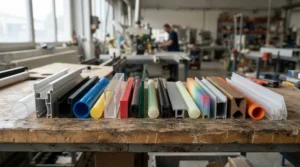
ABS is a hotter, tougher plastic. Pens that run it need real heat, and that is why these refills belong in the teen-and-adult column, not the under-eights. The upside is strength: ABS items are more rigid and durable than PCL doodles.
If you landed here searching for ABS filament refills for 3D pens, the key point is that they are a different category from PCL. They need ventilation and supervision, and they won’t fit a Start+ at all. I couldn’t verify a UK review pool for this pack.
Pros:
- ✅ Strong, rigid ABS for durable models
- ✅ 24 colours in one pack
- ✅ Fits 1.75mm ABS-capable pens
Cons:
- ❌ Unsuitable for young children
- ❌ Totals differ between listings
Indicative price: budget tier; check live listing. Good value for older makers, wrong for little ones.
7. Uxcell 40-Colour ABS Refills — maximum colour range for ABS pens
Where the MIKA3D ABS pack offers 24 colours, the Uxcell pack offers 40, each 16.4 feet (about 5 metres), giving 656 feet in total (roughly 200 metres) at 1.75mm. The listing gives a melting range of 230–245°C.
That 230–245°C is the number to remember. It is nearly four times the typical PCL melt point, which is the whole case against ABS for children. For a teenager building a model, it is a perfectly reasonable temperature. For a six-year-old, it is a burn risk.
Volume is generous: around 200 metres works out cheaper per metre than almost anything else here. The trade-off is that you must have an ABS-capable pen, a ventilated room and an adult nearby. I couldn’t verify a UK review pool for this pack.
Pros:
- ✅ 40 colours at roughly 5 metres each
- ✅ Around 200 metres total volume
- ✅ Suits most 1.75mm ABS pens
Cons:
- ❌ High melt temperature, so burn risk
- ❌ Needs ventilation and supervision
Indicative price: budget tier; check the current price. Great metres-per-pound for older users, but not for children.
What Are PCL Filament Refills for 3D Pens? (And Why Low-Temperature Filament Matters)
PCL filament refills for 3D pens are strands of polycaprolactone plastic that feed into a handheld 3D drawing pen. PCL melts at around 60°C, far below ABS or PLA, which is why it is used in child-oriented pens. It hardens quickly, is biodegradable under the right conditions, and gives off little odour.
Low-temperature filament is the headline feature. The IEEE Xplore topic page on polycaprolactone describes a melting point near 60°C and a glass transition around −60°C. In practice, this means the plastic goes soft and workable with modest heat and sets almost instantly as it cools. That’s what lets a child shape it by hand without a hot nozzle.
There is a catch. Low-temperature filament is also easier to damage with heat. A strand left on a sunny windowsill or a hot car dashboard can soften and bend. PCL also keeps its shape less well in warm rooms than ABS does, so doodles left on a radiator may sag. This is a trade-off, not a flaw.
How to Choose PCL Filament Refills for 3D Pens
- Match the diameter first. 2.5mm for 3Doodler Start-type pens, 1.75mm for most other low-temp pens. A wrong diameter either jams or won’t feed, so this single check prevents most returns.
- Confirm the pen explicitly supports PCL. A pen built for ABS runs far too hot for PCL and may turn it to sludge. Check the manual, not just the listing headline.
- Compare cost per extruded metre, not per strand. A 15cm strand that stretches six to ten times is not the same as a 5-metre roll. Do the arithmetic before buying the biggest pack.
- Read compatibility claims critically. “Compatible with” is the seller’s claim; “designed for” is the manufacturer’s. Treat the first as plausible, the second as reliable.
- Prefer sealed or portioned packaging. Smaller sealed bags protect unopened strands and help with filament shelf life.
- Check what the seller says about safety. Look for BPA-free, non-toxic claims and for UKCA or CE marking on the pen itself.
- Start small with third-party brands. A small sampler tells you more about fit than any amount of listing text.
Spec lines like “low heat” sound reassuring, but the practical question is whether the filament matches your pen’s feed and temperature. That is why compatibility sits at the top of this list.
Child Safety: What the Rules and the Science Say
Child safety around 3D pens comes down to three things: temperature, materials and supervision. PCL addresses the first, retailers claim it covers the second, and only you can supply the third.
On regulation, toys placed on the market in Great Britain fall under the Toys (Safety) Regulations 2011. GOV.UK’s guidance sets out the essential safety requirements and the UKCA marking rules for businesses. A pen sold for children should carry UKCA or CE marking and age warnings. Whether the refills are themselves classed as toys is less clear, so check the pen’s marking and the seller’s documentation.
On materials, 3Doodler’s listing calls its Start filament child-friendly, and Costco’s listing describes the refills as low-heat, BPA-free and non-toxic, for ages 6+. I couldn’t independently verify those claims for third-party brands.
A practical rule: even a cool pen is still an electrical device with a hot-ish nozzle on some models and small parts. Adult supervision, no chewing on strands, and storing refills out of reach of younger siblings are sensible habits regardless of the brand.
Best 3D Pen Filament for Kids: Matching Refills to Age
The best 3D pen filament for kids is the one matched to a low-temperature pen and the child’s age. For ages 6 and up, a Start-type pen with 3Doodler Start+ refills or compatible 2.5mm PCL is the most conservative choice. Retailer listings position those refills at 6+.
For younger children who want longer continuous strands, myFirst refills use 5-metre 1.75mm PCL in the myFirst 3D Pen Make. For older kids who’ve outgrown the basics, the choice is more about pen features than filament.
Where families go wrong is moving a child up to an ABS pen too early because the models look stronger. The temperature gap is large: PCL around 60°C versus ABS at 230–245°C per the Uxcell listing. Until a child can reliably follow safety rules, I’d keep to PCL.
Colour choice matters too. Younger children tend to do better with a few vivid colours than with 32 pastel shades that look alike on the table, so a smaller pack of MIKA3D PCL may suit them better than a giant variety box.
ABS Filament Refills for 3D Pens vs PCL
ABS filament refills for 3D pens and PCL refills are different tools, and the gap is mostly about heat, strength and ventilation.
| Feature | PCL | ABS |
|---|---|---|
| Melt/print temperature | Around 60°C melt (pen figures vary) | Roughly 230–245°C |
| Typical user | Children 6+ | Teens and adults |
| Strength | Flexible, softer | Rigid, tougher |
| Odour and emissions | Low (seller claims) | Higher, ventilate |
| Best For | 3Doodler Start+ Eco-Filament Refills, myFirst 3D Pen Make PCL Refills | MIKA3D 24-Colour ABS Refills, Uxcell 40-Colour ABS Refills |
The table shows why age should drive the decision. PCL’s low temperature makes it the default for children, while ABS suits older makers who want sturdier models. The emissions point is worth taking seriously. A study from the US National Institute for Occupational Safety and Health, hosted on the CDC’s stacks repository, found that filament type significantly influenced emissions, with ABS among the highest emitters of ultrafine particles. A separate randomised study in Munich also reported more indisposition and odour nuisance with ABS than with PLA. These were desktop printer studies, not pens, so treat them as a precaution, not a measurement of pen risk. If you use ABS, ventilate the room.
Cheapest 3D Pen Filament Refills: What Actually Saves Money
The cheapest 3D pen filament refills are rarely the ones with the lowest sticker price. Cost per extruded metre is the honest measure, and it depends on strand length, stretch and waste.
Here’s illustrative arithmetic using the official 3Doodler Start+ refills. A 250-strand bag at about £40 yields roughly 229 metres (Costco’s figure of 750 ft) to 375 metres (retailer figures of about 1.5m per strand), so roughly 10–18p per extruded metre. These are illustrative figures only, based on listing claims and indicative prices.
| Option | Why it can be cheaper | Watch out for | Best For |
|---|---|---|---|
| Logiim PCL 2.5mm Refill Packs | Large strand counts, low per-strand cost | Fit and flow risk | Families with heavy use |
| PRINTOXE PCL 1.75mm 10-Colour Pack | 100 metres in sealed bags | Pen compatibility | 1.75mm pen owners |
| Uxcell 40-Colour ABS Refills | Around 200 metres at budget tier | Not for children | Teen makers |
The cheapest option on paper is not always the best value. If a bulk pack jams the pen or arrives in mixed colours you can’t use, the saving evaporates. The sensible approach is a small trial of any third-party brand, then a bulk purchase once you trust it.

Common Mistakes When Buying PCL Filament Refills for 3D Pens
Buying by price alone. A cheap pack in the wrong diameter is the most expensive pack, because it can’t be used.
Assuming all 1.75mm filament fits all pens. The myFirst refills are explicitly exclusive to the myFirst Make, so a 1.75mm label is not a universal pass.
Mixing up PCL, PLA and ABS. A search for “3D pen refills” returns all three. Wiseten-style PLA packs (190–220°C) will not suit a low-temperature pen, and ABS runs hotter still.
Ignoring the sealed-pack advantage. Large loose bundles can dry, tangle and collect dust. Sealed portions, like the bags in the PRINTOXE pack, are worth a small premium.
Buying the biggest pack first. Test with a sampler like MIKA3D PCL, then scale up.
Skipping the age check. Start+ refills are positioned at 6+, and ABS pens are not for little ones.
Practical Usage Guide: Loading, Using and Caring for PCL Refills
Getting good results is mostly about gentle habits.
- Let the pen reach operating temperature before loading. The myFirst listing suggests waiting until the pen is ready before extruding, then feeding gently.
- Feed slowly and let the pen pull. Forcing a strand is the fastest route to a jam.
- Match speed to the line you want. Slower movement gives thicker lines, faster gives thinner ones, because the plastic stretches as it is pulled.
- Don’t leave filament sitting in the pen. One storage guide warns that filament left inside can degrade and cause clogs.
- Clear the pen at the end of a session following the manufacturer’s instructions.
- Keep colours separate. Mixing half-melted ends in the nozzle muddies colours. Run a few centimetres of the new colour through to flush the old one.
- Use a stencil or app template for beginners. The 3Doodler Start+ listing mentions an app with templates, which help younger children get a satisfying first result quickly.
✨ Ready to Stock Up?
🔍 Take your doodling to the next level with these carefully selected refills. Click on any highlighted product to check current pricing and availability. Whichever you choose, you’ll be giving your young inventor plenty to create!
Filament Shelf Life: How Long Do PCL Refills Really Last?
Filament shelf life is the period during which a refill keeps its original flow and strength under suitable storage. Manufacturers’ data sheets often quote about 24 months for sealed, dry, room-temperature storage, but one storage guide cautions that this isn’t a universal rule for every filament type.
Moisture is the main enemy for most filament. For ABS, one retailer guide suggests unopened storage of several years, with opened ABS lasting months in ordinary indoor air. For PCL, I couldn’t find a firm pen-specific shelf life. PCL is a polyester that degrades by hydrolysis, and the IEEE topic page notes a degradation time of two to four years under physiological conditions. That isn’t the same as a drawer in your house, but it suggests slow ageing rather than sudden failure.
Heat is the more practical threat with PCL because it softens at around 60°C. Keep refills away from radiators, windowsills and car interiors.
Storage tips that follow from the evidence:
- Keep unopened sealed bags sealed, as in the PRINTOXE packs.
- Use airtight containers with a desiccant for opened strands.
- Store in a cool, dark, dry place.
- Return strands to the bag soon after use.
- If strands feel brittle or bend unevenly, retire them rather than risk a jam.
Real-World Scenarios: Which Refills for Which Household?
The six-year-old’s birthday gift. A parent has a 3Doodler Start+ pen and a budget of around £20. Start with a small pack of 3Doodler Start+ refills for guaranteed fit, add a MIKA3D PCL sampler if colours run short, and keep the pen’s UKCA or CE marking and age rating in view.
The after-school club. A teacher runs a weekly session for ten children, each doodling for 30 minutes. This is where bulk wins. A 320-strand Logiim pack gives 32 colours to share, but test a small pack with the pen first. Store the rest in sealed containers.
The 14-year-old model-maker. A teen wants sturdy parts for a miniature set. An ABS-capable pen with Uxcell or MIKA3D ABS refills suits this, but ventilate the room and keep an adult nearby, given the 230–245°C melt range and the emissions research.
The myFirst household. Owners of the myFirst Make should skip the guesswork and buy myFirst refills, then consider PRINTOXE only if they’ve confirmed the pen’s 1.75mm low-temperature compatibility.
Problem → Solution Guide: Fixing Common Refill Headaches
Problem: the strand won’t feed. Check the diameter first. A 2.5mm strand in a 1.75mm pen, or vice versa, is the usual culprit. Confirm the pen has reached temperature.
Problem: the nozzle clogs mid-doodle. Don’t force the strand. Follow the manual’s clearing procedure and avoid leaving filament in a cooling pen, which one storage guide links to clogs.
Problem: colours look muddy. Residual melted plastic is mixing. Push a few centimetres of the new colour through before drawing.
Problem: doodles droop or bend. PCL softens at low temperatures, so keep models away from heat sources. For sturdier projects, an older user might consider ABS.
Problem: third-party refills jam but official ones don’t. This is a fit and consistency issue. Return the pack and revert to 3Doodler Start+ refills for that pen, then try a different third-party brand with a small order.
Problem: you’re burning through refills. Practise slow, steady strokes and use stencils. Cost per extruded metre improves when less plastic is wasted on false starts.
FAQ: PCL Filament Refills for 3D Pens
❓ Can I use PLA filament in a low-temperature PCL pen?
❓ Are third-party refills safe for the 3Doodler Start+?
❓ Is PCL biodegradable, and can I put it in the bin?
❓ How many refills do I need for a party of ten?
❓ Where can I find the cheapest 3D pen filament refills in the UK?
Conclusion
Choosing PCL filament refills for 3D pens comes down to four checks: diameter, pen compatibility, age suitability and cost per extruded metre. If you want the lowest-risk route for a Start-type pen, the 3Doodler Start+ Eco-Filament Refills are the safest guaranteed fit. If you want more colour for less money, the Logiim PCL 2.5mm Refill Packs are worth a small trial first, and the MIKA3D 12-Colour PCL Strands make a sensible sampler.
For 1.75mm pens, the myFirst 3D Pen Make PCL Refills suit that pen only, while the PRINTOXE PCL 1.75mm 10-Colour Pack offers the most volume if your pen supports it. For teens and adults, MIKA3D 24-Colour ABS Refills and Uxcell 40-Colour ABS Refills are sturdier but hotter, so ventilate and supervise.
Keep the best 3D pen filament for kids in the low-temperature family, store refills cool and dry to protect their shelf life, and use sealed portions where you can. Prices change often, so check the live listing before you commit.
Recommended for You
- 3D Pen Filament Refills: 7 Best Picks For UK Makers (2026)
- 3D Pen For Artists: 7 Brilliant Picks For UK Makers (2026)
- Professional 3D Pen: 7 Best Picks Worth Buying (2026)
Disclaimer: This article contains affiliate links. As an Amazon Associate, I earn from qualifying purchases. If you purchase products through these links, we may earn a small commission at no additional cost to you.
✨ Found this helpful? Share it with your friends! 💬🤗
