

In This Article
A PLA filament 5kg bulk buy means purchasing five kilograms of polylactic acid 3D printer filament in one order, either as a single large spool or a bundle of five 1kg spools. The aim is to lower the price per kilo, avoid constant reordering and keep the same colour or batch on hand for bigger projects.
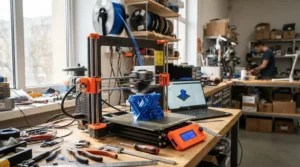
Why does it matter? PLA is the most widely used plastic filament in FDM printing, so if you print every week, you’re not really buying filament. You’re running a subscription to it, one pricey 1kg spool at a time. Bulk buying breaks that cycle. A single 1kg spool often lands somewhere in the £14-£20 range, while a good 5kg deal can drop to roughly £8-£12 per kilo. Over a year, a busy printer can save a three-figure sum.
But bulk isn’t a free lunch. A 5kg reel is heavy and fussy about storage. Some printers can’t hold one at all, and five kilos of damp or badly wound filament is an expensive way to learn a lesson.
So this guide compares seven real options. It also digs into cost per print, filament storage solutions, reusable spools, biodegradable PLA filament claims and PLA filament for fast printing, so your PLA filament 5kg bulk buy is a smart one. Product details come from manufacturer and retailer listings. Where genuine reviews are thin, I say so rather than paper over the gap.
PLA Filament 5kg Bulk Buy at a Glance: Quick Comparison
Short on time? Here are the five picks that matter most, matched to what they do best. All prices are ranges at the time of research, so check current price and availability before ordering.
| Pick | Format | Price Range (5kg) | Best For |
|---|---|---|---|
| Geeetech PLA 5kg | 5kg of 1.75mm PLA | Around £25-£45 | Lowest cost per kilo |
| SUNLU PLA+ 5kg | 5kg spool or 5×1kg bundle | Around £40-£55 | All-round value |
| ELEGOO Rapid PLA+ | Multi-kilo sets of 1kg spools | Around £50-£70 per 5kg | PLA filament for fast printing |
| REAL Filament PLA Recycled 5kg | 5kg spool | Around £85-£105 | Eco-minded printers |
| Polymaker PolyLite PLA Pro 5kg | 5kg spool | Around £75-£100 | Tougher functional parts |
Looking at the comparison above, SUNLU PLA+ 5kg is the sweet spot for most people. It’s cheap, flexible on format and backed by a UK webstore. Geeetech PLA 5kg undercuts everyone, but it asks you to do more homework on delivery and consistency.
ELEGOO Rapid PLA+ only earns its place if your printer can actually use the speed. REAL Filament PLA Recycled 5kg and Polymaker PolyLite PLA Pro 5kg are the premium routes. You pay more per kilo and get sustainability or toughness in return.
The cheapest option isn’t automatically the best value, and the most expensive isn’t automatically the best filament. The sections below show where each pick earns its keep.
💬 Just one click — help others make better buying decisions too!😊
Top 7 PLA Filament 5kg Bulk Buy Options: Expert Analysis
Each pick below is ordered roughly from cheapest to priciest per kilo. Specs are interpreted rather than recited, and review sentiment is clearly labelled as aggregated.
1. Geeetech PLA 5kg — lowest cost per kilo in this round-up
The headline here is price. Geeetech PLA 5kg is the cheapest way I found to put five kilograms of 1.75mm PLA on your shelf. Listings describe a density of around 1.25 g/cm³, a tensile strength of at least 60 MPa and a “bubble-free” claim. These are manufacturer figures, not independent lab results.
A 60 MPa claim puts it in ordinary-PLA territory: stiff, a touch brittle and perfect for prototypes, display models and fixtures rather than parts that get dropped. The real question is logistics. The deals I found ran through overseas marketplaces, so UK buyers should check where it ships from, how long delivery takes and whether customs charges apply before trusting the headline price.
I couldn’t verify a meaningful pool of genuine reviews for this exact 5kg listing, so treat it as a lower-evidence buy. Measure the first few metres of filament with calipers before committing to a big job. It suits the confident hobbyist who already knows their printer’s settings and wants cheap material for tests and draft prints.
Pros:
- ✅ Lowest price per kilo here
- ✅ Full 5kg of 1.75mm in black, grey or white
- ✅ Tensile strength claim of 60 MPa or more
Cons:
- ❌ Thin verifiable review evidence
- ❌ UK delivery and customs uncertainty
Expect around £25-£45 for 5kg (check current price). It’s excellent value if it arrives in good condition.
2. SUNLU PLA+ 5kg — best all-round value, with a UK webstore
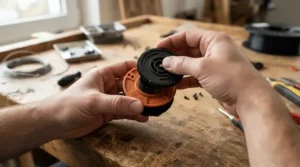
SUNLU PLA+ 5kg is where most buyers should start. It’s cheap, flexible on format (one 5kg large spool or a five-by-1kg bundle) and has a stated ±0.02mm diameter tolerance. SUNLU lists a nozzle range of 205-215°C for 50-100mm/s and 215-245°C for 100-200mm/s, a bed at 50-60°C and speeds up to 300mm/s. Each kilo runs about 330 metres.
In practice, that means it’s forgiving at default speeds and has headroom if you upgrade to a faster printer later. SUNLU also publishes a drying temperature of 50°C and a humidity target below 20% RH, which matters because a bulk spool stays open for months. The five-spool bundle is the safer route for enclosed multi-spool feeders. The single large spool suits an open spool holder.
Reviewer sentiment is mixed in an informative way. A 2026 community-ranking roundup calls it a favourite for bulk buyers and cites a first-print success rate near 90%. Another comparison it references places it lower for batch-to-batch consistency. So it’s a value pick, not a precision pick.
Pros:
- ✅ Strong price per kilo
- ✅ Choice of 5kg spool or 5×1kg bundle
- ✅ Published drying and humidity guidance
Cons:
- ❌ Consistency questioned in one comparison
- ❌ Single 5kg reel may not fit enclosed holders
Around £40-£55 (check current price). It’s the best balance of cost and flexibility in this list.
3. ELEGOO PLA 5kg — tight tolerance claim at a bulk price
ELEGOO PLA 5kg suits someone who wants a recognisable brand without premium pricing. Elegoo quotes ±0.02mm dimensional accuracy, and one 2026 roundup lists its PLA for speeds up to 200mm/s and tags it “lowest cost per print”.
If that tolerance holds, you get steadier extrusion and fewer thin patches mid-print. That’s worth more than a cheap sticker price on long jobs, where a single under-extruded layer can scrap hours of work. Elegoo’s UK webstore also lists UK delivery with free shipping above a spend of roughly £40 at the time of research, which is handy for a 5kg order that would otherwise attract postage.
Remember that standard PLA is stiffer and more brittle than the PLA+ grades in this list. It’s best for models, enclosures and decorative work. I couldn’t verify a large independent review pool for the 5kg pack specifically, so the “value” tag is an editorial verdict rather than crowd consensus. Use it as a sensible default if you’re printing display pieces by the dozen.
Pros:
- ✅ ±0.02mm tolerance claimed
- ✅ Brand with a UK webstore
- ✅ Rated up to 200mm/s in one roundup
Cons:
- ❌ Tolerance figures are manufacturer claims
- ❌ Limited independent reviews for the 5kg pack
Around £40-£60 (check current price). Good value for models and décor.
4. ELEGOO Rapid PLA+ — built for 600mm/s printing
If you want PLA filament for fast printing, ELEGOO Rapid PLA+ is the dedicated option. Elegoo says its enhanced flow supports up to 600mm/s, with ±0.02mm tolerance, a 200-230°C nozzle range and a 35-65°C bed. It arrives vacuum-sealed with desiccant on cardboard spools.
One honest caveat on format. The bulk set I could verify is a 10kg set of 1kg spools, so a “5kg” buy means five spools or half a set. Also, 600mm/s is a ceiling, not a promise. At a 0.2mm layer and 0.42mm line width, 300mm/s already asks about 25 mm³/s from the hotend, and 600mm/s doubles that. On a stock budget printer you’ll gain nothing over ordinary PLA. On a high-flow CoreXY machine, this is where the spec starts to matter.
The only review sample I could verify was tiny: three ratings on one Swiss retailer averaging 4.0 out of 5. That’s too small to draw conclusions, so I’d buy one spool first.
Pros:
- ✅ Rated for up to 600mm/s
- ✅ Vacuum-sealed with desiccant included
- ✅ Cardboard spools reduce plastic waste
Cons:
- ❌ Speed gains need a high-flow printer
- ❌ Very small verifiable review sample
Around £50-£70 per 5kg-equivalent (check current price). It’s worth it only if your hardware can use the speed.
5. eSUN PLA+ 5kg — tougher everyday PLA+ for functional parts
eSUN PLA+ 5kg is the pick for brackets, clips and anything that needs to flex before it snaps. Retail listings give 1.75mm filament with a 210-230°C nozzle range, a 45-60°C bed, a density of 1.24 g/cm³, 60 MPa tensile strength and 29% elongation at break. Tolerance is listed at ±0.05mm on some retailer pages and ±0.03mm on others, so it isn’t the tightest here.
High elongation is the practical headline. Parts bend and deform rather than shattering, which suits clip-on holders and tool organisers. One retailer lists a heat deflection temperature of around 53°C, which is worth remembering. A UK summer car dashboard can exceed that, so keep PLA parts out of parked cars.
On sentiment, a 2026 ranking of community trust places eSUN among its top five filament brands, alongside Polymaker, Prusament, Bambu Lab and Hatchbox. That reflects general brand confidence rather than this specific 5kg spool. European price-comparison listings confirm a 5kg black version exists, but UK availability varies by seller.
Pros:
- ✅ High elongation at break (29% claimed)
- ✅ Strong community trust ranking
- ✅ Usable at higher speeds with correct profiles
Cons:
- ❌ Looser stated tolerance than rivals
- ❌ Pricier than budget picks
Around £60-£80 (check current price). A fair premium for functional work.

6. REAL Filament PLA Recycled 5kg — recycled factory off-cuts on a giant reel
REAL Filament PLA Recycled 5kg is made from the manufacturer’s own industrial leftovers, recycled into new 1.75mm filament. The retailer lists ±0.05mm deviation, roundness above 95%, a nozzle range of 190-220°C (ideally around 210°C) and a bed range of 0-55°C. The copy also says at least 60°C is ideal, so I’d treat the bed figures as guidance rather than gospel.
The low temperature range is gentle on hotends. The reel is the thing to check: roughly 35cm across, 10.5cm wide, with a 5.1cm hole. Many printer spool holders won’t take that, so measure your clearance first. The retailer advises storing it at 15-25°C in dry conditions.
For reviews, I couldn’t verify sentiment for the 5kg recycled line itself. Reviews on a Greek retailer page for other Real Filament sizes were mixed, with some buyers reporting winding or tangling problems and others praising first-layer adhesion. That’s a reason to inspect the spool on arrival rather than a verdict.
Pros:
- ✅ Made from recycled industrial leftovers
- ✅ Gentle 190-220°C nozzle range
- ✅ Fewer reel changes on long jobs
Cons:
- ❌ Highest price per kilo here
- ❌ 35cm reel won’t fit many holders
Around £85-£105 (check current price). You’re paying for the sustainability story, so choose it deliberately.
7. Polymaker PolyLite PLA Pro 5kg — toughness with rigidity, on a sturdy reusable spool
Polymaker PolyLite PLA Pro 5kg blends rigidity with impact strength, which ordinary PLA struggles to do. Polymaker lists a nozzle range of 190-220°C, a bed of 30-60°C, a speed range of 30-70mm/s, the fan on, and drying at 55°C for six hours only if the material has absorbed moisture. One distributor claims impact strength several times higher than standard PolyLite PLA. That’s a claim worth testing rather than assuming.
The 30-70mm/s guidance is conservative, so this isn’t a PLA filament for fast printing. Choose it for strength and consistency, not speed. The 5kg plastic spool measures roughly 300mm across and 160mm wide, with a 32mm hole and a spool weight around 819g. That heavy polypropylene reel is one of the better candidates for reusable spools later.
For sentiment, a 2026 roundup names the PolyLite family “best overall” for consistency, and Polymaker sits in the top five of one community-trust ranking. UK retailers list 1kg PLA Pro at around £20 inc VAT, so a 5kg bulk buy normally works out cheaper per kilo.
Pros:
- ✅ Toughness and rigidity combined
- ✅ Sturdy 5kg spool, reusable afterwards
- ✅ Strong consistency reputation
Cons:
- ❌ Conservative 30-70mm/s speed guidance
- ❌ Premium price per kilo
Around £75-£100 (check current price). It’s a quality buy for functional prints, if not a bargain.
Top 7 Comparison Table
| Product | Format | Standout Spec | Price Range (5kg) | Best For |
|---|---|---|---|---|
| Geeetech PLA 5kg | 5kg PLA | 60 MPa or more tensile (claimed) | Around £25-£45 | Budget drafts |
| SUNLU PLA+ 5kg | 5kg spool or 5×1kg | Up to 300mm/s claimed | Around £40-£55 | All-round value |
| ELEGOO PLA 5kg | 5kg PLA | ±0.02mm tolerance (claimed) | Around £40-£60 | Models and décor |
| ELEGOO Rapid PLA+ | 1kg spool sets | Up to 600mm/s claimed | Around £50-£70 | Fast printing |
| eSUN PLA+ 5kg | 5kg PLA+ | 29% elongation at break | Around £60-£80 | Functional parts |
| REAL Filament PLA Recycled 5kg | 5kg reel | Recycled factory off-cuts | Around £85-£105 | Eco-minded buyers |
| Polymaker PolyLite PLA Pro 5kg | 5kg spool | Toughness plus rigidity | Around £75-£100 | Strong prints |
The table shows a clear price ladder with sensible reasons for each step up. SUNLU PLA+ 5kg and ELEGOO PLA 5kg sit in the budget-to-mid band for everyday printing. eSUN PLA+ 5kg and Polymaker PolyLite PLA Pro 5kg cost more for mechanical performance. REAL Filament PLA Recycled 5kg is the outlier, priced for its recycled origin rather than raw performance.
Filament Storage Solutions for a 5kg Bulk Buy: Keep Every Spool Print-Ready
A bulk buy is only a bargain if the last gram prints as well as the first. PLA is less thirsty than nylon, but it still takes up moisture, and one distributor describes PolyLite PLA Pro as moderately hygroscopic. Wet filament pops, strings and prints rough. Polymaker’s own wet filament troubleshooting guide is a good reference for spotting the symptoms.
The numbers worth knowing: SUNLU recommends keeping filament below 20% RH with desiccant, and drying at around 50°C if needed. Polymaker suggests 55°C for six hours, but only if the material has actually absorbed moisture. REAL advises storing at 15-25°C in dry conditions.
These filament storage solutions work well in UK homes, where garages and sheds see winter condensation:
- Airtight bin plus desiccant and a hygrometer. This is the cheapest option and big enough for several spools.
- Vacuum bags. They’re ideal for spare spools you won’t touch for weeks.
- A printer-side dry box. It keeps the active spool protected while printing.
- A filament dryer. It rescues damp spools. If it’s electrical, check for UKCA or CE marking.
For a 5×1kg bundle, leave spools in their sealed bags and open one at a time. Label each with the date. Keep everything away from sunlight and out of unheated outbuildings. Good filament storage solutions cost a fraction of one ruined spool.

Real-World Scenarios: Which PLA Filament 5kg Bulk Buy Fits You?
Specs are abstract. Here’s how the options map to three realistic print lives, including budget, environment and frequency.
The weekend hobbyist. One printer with an enclosed multi-spool feeder, around 300g a week, a £50 budget and a spare shelf. The SUNLU PLA+ 5kg in its five-spool bundle format fits the feeder, offers several colours and works out at roughly 40-55p for a 50g print. At this usage, five kilos lasts about 16 weeks, which is fine as long as spools stay sealed.
The small seller. Two high-flow printers running most evenings, around 1.5kg a week, and time costs money. ELEGOO Rapid PLA+ makes sense here. At that rate, 5kg disappears in just over three weeks, so storage worries shrink and the faster flow shortens each job. Buy one spool first and confirm your printer’s flow limits before scaling up.
The garage maker. Brackets, jigs and tool holders in a cold, damp outbuilding. Polymaker PolyLite PLA Pro 5kg or eSUN PLA+ 5kg suits parts that need toughness. Keep them in an airtight bin with desiccant, and remember the roughly 53°C heat-deflection figure before printing anything for a hot car.
If sustainability matters more than pennies, REAL Filament PLA Recycled 5kg fits school makerspaces and eco-minded households, provided the printer can physically hold that 35cm reel.
✨ Don’t Miss These Top Picks!
🔍 Take your 3D printing to the next level with these carefully selected spools. Click on any highlighted product to check current pricing and availability. They’ll help you print more, waste less and stop reordering every fortnight!
Bulk Buy Problems and Solutions: Fix the Five Most Common Headaches
Bulk buying introduces problems that a 1kg spool never would. Here are the usual suspects and how to deal with them.
1. The reel won’t fit. Measure your holder’s width, diameter and hole size before ordering. The Polymaker PolyLite PLA Pro 5kg reel is roughly 300mm by 160mm, and REAL Filament PLA Recycled 5kg is around 35cm across. If clearance is tight, choose a five-spool bundle such as SUNLU PLA+ 5kg instead, or use an external holder.
2. Popping, stringing or rough surfaces. This usually signals moisture. Dry the spool at the manufacturer’s temperature (50-55°C) and move it into sealed storage.
3. Diameter drift mid-roll. Check with calipers at several points early on. A spool that wanders is a seller conversation, not a settings fix.
4. Colour mismatch between batches. Buy everything in one order, because colours can differ between production runs.
5. Never finishing the 5kg. Divide five kilos by your monthly usage. If you print 200g a month, you’re holding 25 months of filament, which is too long to leave open. In that case, the five-spool route keeps most of the stock sealed.
Solve these early and a bulk buy stops being a gamble.
How to Choose a PLA Filament 5kg Bulk Buy: 7 Steps
If you want a direct answer on how to choose, here it is. Work through these seven steps in order:
- Check spool fit first. Measure your holder against the reel’s diameter, width and hole. A 5kg reel that won’t mount is just expensive scenery.
- Pick the format. One 5kg spool saves reel changes. Five 1kg spools suit multi-colour feeders and protect unopened stock from moisture.
- Match grade to job. Standard PLA suits models, PLA+ suits functional parts, and fast-flow grades suit high-speed machines.
- Compare cost per print, not just price per kilo. A cheap spool that fails 20% of prints effectively costs a quarter more.
- Read tolerance claims sensibly. Mid-roll spikes in diameter hurt more than the average figure, so ±0.02mm on paper means little without consistency.
- Plan storage before checkout. Budget for an airtight bin, desiccant and a hygrometer, since filament storage solutions are part of the true price.
- Check delivery and returns. UK warehouses, clear returns and no customs surprises matter far more with a heavy order.
Skip step 1 or step 6 and the bulk discount evaporates quickly.
PLA Filament for Fast Printing: What to Expect in the Real World
Marketing loves big numbers. ELEGOO Rapid PLA+ claims up to 600mm/s, SUNLU PLA+ 5kg claims up to 300mm/s and eSUN PLA+ 5kg lists high-speed use with the right profile. Meanwhile Polymaker PolyLite PLA Pro 5kg recommends just 30-70mm/s. Why such a gap?
Speed is limited by how much plastic your hotend can melt each second, known as volumetric flow. At a 0.2mm layer and 0.42mm line width, 300mm/s demands about 25 mm³/s, and 600mm/s roughly 50. A stock budget hotend will under-extrude long before the filament runs out of ability.
In real prints, acceleration matters too. Small parts with lots of corners rarely reach top speed, so the time saved on a 40mm model is far smaller than the headline suggests. Big, simple shapes such as vases, trays and enclosures gain the most.
If you’re chasing PLA filament for fast printing, expect to raise the nozzle temperature (SUNLU lists 215-245°C for 100-200mm/s), boost cooling and keep the spool bone dry. Wet filament at speed is a recipe for blobs. Match the grade to a machine that can use it, and don’t pay a premium for speed your hardware can’t deliver.
Cost Per Print: What a 5kg Bulk Buy Really Saves
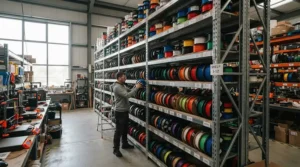
Price per kilo is a starting point. Cost per print is what your wallet feels. The table below uses the approximate price ranges above for a 5kg order, applied to a typical 50g print.
| Product | Approx. Price per kg | Cost of a 50g Print | Best For |
|---|---|---|---|
| Geeetech PLA 5kg | £5-£9 | 25p-45p | Cheapest drafts |
| SUNLU PLA+ 5kg | £8-£11 | 40p-55p | Everyday value |
| ELEGOO PLA 5kg | £8-£12 | 40p-60p | Models and décor |
| ELEGOO Rapid PLA+ | £10-£14 | 50p-70p | Fast production |
| eSUN PLA+ 5kg | £12-£16 | 60p-80p | Functional parts |
| Polymaker PolyLite PLA Pro 5kg | £15-£20 | 75p-£1.00 | Strong prints |
| REAL Filament PLA Recycled 5kg | £17-£21 | 85p-£1.05 | Eco-minded buyers |
A single 1kg spool in the £14-£20 range works out at roughly 70p-£1.00 per 50g print, so the cheaper bulk options undercut it noticeably. A printer using a kilo a week moving from about £17 to £9 per kilo saves around £400 a year.
Failures change the maths. If a £9 spool fails 20% of prints, it effectively costs about £11.25 per usable kilo, which still beats a £15 spool that fails 5%. Add the cost of storage gear and the picture is more honest. The best cost per print comes from the filament that works first time at a sensible price, not the lowest sticker.
Biodegradable PLA Filament: What the Label Actually Means
“Biodegradable” sells spools, but it’s easy to over-read. SUNLU’s product copy describes its PLA as biodegradable, and REAL’s retailer pages make similar claims. Those labels are technically defensible, but they don’t mean a failed print will vanish in your garden.
European guidance explains why. CORDIS notes that biodegradable doesn’t mean a product degrades in any environment, and that industrial composting under specific conditions is normally needed. It adds that European standards expect materials to biodegrade within six months in industrial plants. Home compost heaps rarely get hot enough.
For UK printers, that has practical consequences. Few councils accept PLA in kerbside food-waste collections, so most failed prints end up in general waste. Treating biodegradable PLA filament as a reason to print carelessly misses the point.
Real sustainability gains come from printing fewer failures, buying only what you’ll use and choosing options like REAL Filament PLA Recycled 5kg, which reuses factory off-cuts. Also be cautious with “food safe” claims. Layer lines can harbour bacteria, so printed parts aren’t automatically safe for food use just because the polymer is plant-derived.
Reusable Spools: Cut Waste on a 5kg Bulk Buy
Five kilos of filament means plenty of empty reels afterwards, so it pays to think about reusable spools from the start.
The Polymaker PolyLite PLA Pro 5kg reel is a heavy polypropylene spool, around 819g, so it’s built to be refilled or repurposed. ELEGOO Rapid PLA+ and many Polymaker 1kg options use cardboard spools, which are lighter and easier to recycle. SUNLU’s 1kg spools weigh around 300g (1.3kg gross against 1kg net).
Refill filament is the cleverest route. UK retailers stock spoolless refill rolls, such as an eSUN PLA+ refill in 1kg, designed to slot onto a spool you already own. Refills typically cost a little less than spooled versions, and they cut plastic waste.
A few ways to get the most from reusable spools:
- Keep a few empty reels and rewind spare lengths of filament onto them.
- Use a sturdy 5kg reel as a master spool and decant smaller amounts for multi-colour jobs.
- Print or buy spool adapters so a large reel fits your holder.
Reusable spools won’t transform your carbon footprint alone, but they reduce waste and shave a little off every refill.
5kg Bulk PLA vs 1kg Spools: Which Format Wins?
The format debate has three contenders: one big 5kg spool, a bundle of five 1kg spools, or buying single 1kg spools as you go.
| Factor | Single 5kg Spool | 5×1kg Bundle | Single 1kg Spools |
|---|---|---|---|
| Price per kilo | Often lowest | Low to mid | Highest |
| Spool changes | Rare | Frequent | Frequent |
| Moisture risk | Higher (one open reel) | Lower (sealed spools) | Lowest |
| Printer compatibility | Often limited | Wide | Widest |
| Colour variety | One colour | Several | Any |
| Best For | High-volume single colour | Multi-colour hobbyists | Low-volume printers |
The table shows that the cheapest route isn’t always the easiest. A single 5kg spool wins on cost and convenience but can be awkward to mount and leaves one big reel open to humidity. The five-spool bundle is the more flexible choice for most home printers, particularly those with enclosed feeders.
Single 1kg spools make sense only if you print rarely or want maximum colour variety. If you use under a kilo a month, don’t force a bulk buy. The savings vanish when filament sits unused.

FAQ
❓ How many prints can I get from a 5kg spool of PLA?
❓ Will a 5kg spool fit my 3D printer?
❓ How long can unopened PLA filament be stored?
❓ Do I need a filament dryer for a PLA 5kg bulk buy?
❓ Is PLA+ worth paying more for in bulk?
Conclusion
A well-chosen PLA filament 5kg bulk buy can cut your filament costs substantially, but only if the maths, the reel and the storage all line up. For most British hobbyists, SUNLU PLA+ 5kg is the best starting point. Geeetech PLA 5kg wins on pure price if you accept the delivery homework, and ELEGOO PLA 5kg is a sensible mid-range default for models.
If your machine is quick, ELEGOO Rapid PLA+ rewards the investment. For tougher parts, eSUN PLA+ 5kg and Polymaker PolyLite PLA Pro 5kg are better matched. REAL Filament PLA Recycled 5kg suits buyers who value its recycled origin over the lowest cost per print.
Three habits protect the saving: measure your holder before ordering, invest in proper filament storage solutions, and think about reusable spools when each kilo runs out. Keep expectations realistic on end-of-life too. As Moral Fibres’ UK guide to PLA points out, kerbside composting schemes rarely take PLA, so biodegradable PLA filament is no excuse for waste.
Recommended for You
- PLA Filament 1kg: 7 Best Spools For UK Printers (2026)
- PLA Vs PETG Vs ABS: 7 Best Filaments & Mistakes To Avoid (2026)
- 1.75mm Filament Multipack: 7 Best Bundles For UK Makers (2026)
Disclaimer: This article contains affiliate links. As an Amazon Associate, I earn from qualifying purchases. If you purchase products through these links, we may earn a small commission at no additional cost to you.
✨ Found this helpful? Share it with your friends! 💬🤗
