In This Article
PLA vs PETG vs ABS is the three-way choice behind most FDM prints. PLA is the easy, low-warp starter. PETG is the tougher, moisture-resistant all-rounder. ABS is the heat-tolerant, impact-resistant option that wants an enclosure and good ventilation. Choose by where the finished part will live, not by how it looks on the bed.
Here’s the thing most beginner guides skip: the three plastics don’t differ much in price. A 1 kg spool of PLA and a 1 kg spool of PETG cost about the same in 2026, and ABS isn’t far behind. What separates them is temperature, toughness and what comes out of the nozzle while they print. Get that wrong and you end up with a phone mount that slumps on a sunny dashboard, or a printer that makes your spare room smell like a burnt Lego factory.
The key idea is the glass transition temperature. It’s the point where a rigid plastic turns soft and rubbery, and the glass transition is a gradual, reversible change in amorphous polymers, not a melting point. PLA hits it at roughly 55-65°C. PETG gets there nearer 80°C. ABS holds out until about 105°C. Those three numbers explain more real-world failures than any marketing blurb.
This guide compares the three materials side by side, then picks seven real filaments across budget, mid-range and premium. We also cover print enclosure requirements, fumes and ventilation, the safest 3D printer filament for home use, and the best filament for functional parts. Everything below is based on published specs, manufacturer data, independent roundups and aggregated review sentiment. I haven’t printed any of these spools myself, and I won’t pretend otherwise. Prices are ballpark ranges at the time of research, so check current listings before you buy.
Quick Comparison: PLA vs PETG vs ABS at a Glance
| Property | PLA | PETG | ABS |
|---|---|---|---|
| Glass transition temperature | ~55-65°C | ~80°C | ~105°C |
| Typical nozzle range | 180-220°C | 230-255°C | 220-250°C |
| Typical bed temperature | Cool to ~55°C | ~70-80°C | ~80-110°C |
| Enclosure | Not needed | Not necessary | Strongly recommended |
| Fumes concern | Lowest of the three | Moderate (less studied) | Highest (styrene) |
| Difficulty | Beginner | Easy-intermediate | Intermediate |
| Best For | Prototypes, display pieces | Tough everyday parts, damp spots | Hot, heavy-duty parts |
The table makes the pattern clear. Each step from PLA to PETG to ABS buys you more heat tolerance and toughness, and charges you in printing fuss. PETG sits in the sweet spot for most households: no enclosure, little warping, and a Tg that survives a kitchen or a hot car better than PLA ever will. ABS only earns its place when the part genuinely needs 90°C-plus survival or maximum impact resistance.
💬 Just one click — help others make better buying decisions too!😊
Top 7 Filaments for PLA vs PETG vs ABS: Expert Analysis
I’ve picked two PLA options, three PETG options and two ABS options, spanning budget to premium. Each entry reads the spec sheet for you and tells you what it means at the printer.
1. eSUN PLA+ — best budget all-rounder for beginners
eSUN PLA+ is an upgraded PLA aimed at people who want a bit more toughness than bargain-bin basic PLA without learning a new process.
The retailer spec sheet lists a nozzle range of 205±15°C and a bed range of 40±15°C, with blue painter’s tape as the suggested surface. In practice, that means a barely warm bed and low energy use. It works on printers without enclosures, and it forgives sloppy first layers better than PETG does. One independent filament report suggests settling around 210°C, because higher temperatures caused drooping.
On paper this is a first-spool filament. It’s ideal for desk gadgets, cable organisers and prototypes, but its glass transition temperature still sits near PLA’s usual 55-65°C, so it’s wrong for anything living in a sunny window or a car.
Aggregated user comments are mixed in a useful way. Forum users say it works with standard PLA presets but strings more than Prusament PLA, and one reviewer found it can feel stiff and leave small stray loops. Tune it and it behaves.
Pros:
- ✅ Very forgiving on cool beds and basic printers
- ✅ Tougher than basic PLA for light mechanical use
- ✅ Widely available and sensibly priced
Cons:
- ❌ Can string more than premium PLA
- ❌ Softens in cars and hot rooms
Expect roughly £14-£20 per kilo at the time of research. For a first spool, it’s good value.

2. Elegoo Rapid PLA+ — built for fast modern printers
Elegoo Rapid PLA+ is tuned for high-flow printing, and that’s the whole reason to choose it.
Retailer listings quote an extrusion window of about 200-230°C and advertise speeds well beyond what a stock budget printer can do, with some listings citing figures up to 600 mm/s. That headline number only matters if your machine has a high-flow hotend and strong part cooling. On a slow, older printer, you’re paying for headroom you’ll never use.
The honest take: this suits owners of fast CoreXY printers who want to shorten print times for brackets, storage bins and jigs. Because it’s still PLA, the glass transition temperature limit applies, and it’s no substitute for PETG in heat or damp conditions.
I couldn’t verify enough independent review data on this specific variant to summarise user sentiment responsibly. Check recent buyer comments for your colour before committing, as colourways can behave differently.
Pros:
- ✅ Designed for high-speed, high-flow printing
- ✅ Standard PLA ease with no enclosure needed
- ✅ Sensible price for bulk everyday printing
Cons:
- ❌ Speed benefits wasted on slow printers
- ❌ Same low heat ceiling as any PLA
Budget around £12-£18 per kilo. It’s good value if your printer can exploit it.
3. Amazon Basics PETG — cheapest way into PETG
Amazon Basics PETG is the entry ticket if you’ve outgrown PLA but don’t want to spend premium money.
The listing describes a 1.75 mm, 1 kg spool with a built-in gauge showing remaining material, which is handy for judging whether a long print will finish. It also claims no heated bed is needed. I’d treat that sceptically: Prusa’s own PETG guidance recommends a bed around 80±10°C, and the typical industry range for PETG beds is higher than PLA’s. A warm bed will make your life far easier.
Who’s it for? Budget buyers making brackets, clips and covers. It won’t win any precision contests, but PETG at this price is hard to argue with. Note that PETG can bond too well to smooth PEI and bare glass, so use a separator such as glue stick.
I couldn’t find enough credible independent review data for this product, so I won’t summarise customer sentiment. Read recent buyer feedback and compare batches.
Pros:
- ✅ Lowest-cost way into PETG
- ✅ Spool gauge shows remaining filament
- ✅ Toughness and moisture resistance beyond PLA
Cons:
- ❌ Needs a warm bed despite listing claims
- ❌ Limited independent testing data available
Expect around £12-£16 per kilo. It’s a sensible starter PETG for budgeters.
4. Polymaker PETG — best PETG for fast printers
Polymaker PETG earned the Editor’s Choice badge in one 2026 roundup that compared twelve PETG filaments.
That roundup credits a high-speed formula and warp-free printing on nearly any FDM printer. Note that’s a reviewer’s verdict, not aggregated buyer sentiment, so treat it as one data point. Typical PETG settings apply: nozzle roughly 230-255°C and a bed around 70-80°C, but always check the spool label because blends differ.
What it means in practice: PETG usually prints slower than PLA because it doesn’t liquefy as quickly, so a formula tuned for high flow narrows that gap. If you own a Bambu Lab-style machine or a tuned Klipper printer, this is where your money earns its keep.
Be realistic about PETG’s trade-offs. It strings more than PLA, it’s hygroscopic, and its Tg of around 80°C is better than PLA but nowhere near ABS.
Pros:
- ✅ High-speed formula suits modern printers
- ✅ Low warping without an enclosure
- ✅ Strong layer bonding for functional prints
Cons:
- ❌ Still prone to stringing if wet
- ❌ Pricier than budget PETG
Budget roughly £16-£25 per kilo. It’s a strong mid-range pick for fast printers.
5. Prusament PETG — most consistent premium PETG
Prusament PETG is made in-house by Prusa Research, and consistency is the selling point.
Prusa quotes a recommended nozzle of 250±10°C and a bed of 80±10°C, and says no enclosure or special hotend is needed. Retailer descriptions cite a manufacturing deviation of ±0.02 mm, and each spool carries a QR code linking to its measured parameters. That tolerance means steadier extrusion, which matters for tight-fitting functional parts like snap-fits.
The honest take: this is for people who print things that must fit. Prusa also warns that PETG oozes and may leave strings, and that bed adhesion is strong. Their advice is a heat gun for stray strings and a textured or satin sheet. It isn’t an abrasive material, so a standard brass nozzle works.
Review sentiment around Prusament generally revolves around reliability and dependable colours, though I couldn’t verify a large pool of recent UK customer comments to quote responsibly.
Pros:
- ✅ Tight diameter tolerance for precise parts
- ✅ No enclosure or hardened nozzle needed
- ✅ Per-spool measured data via QR code
Cons:
- ❌ Strong bed adhesion risks damaging sheets
- ❌ Priciest PETG here
Expect roughly £22-£30 per kilo. The premium buys consistency, not magic.
6. Polymaker PolyLite ABS — lower-odour ABS for functional parts
Polymaker PolyLite ABS is the pick if you want ABS’s heat resistance with fewer of the usual headaches.
The manufacturer says it’s formulated from a specialty bulk-polymerised ABS resin with significantly lower volatile content than traditional ABS, and recommends printing on an enclosed printer. One roundup reviewer reported good results at 245-260°C nozzle and 90-100°C bed. That bed temperature is why ABS needs a warm, draught-free enclosure. It also smooths with acetone vapour, handy for sealed, glossy housings.
The fumes angle matters. Lab work published through the US National Institutes of Health found ABS emitted larger particles than PLA, and covering the printer cut total particle emissions by a factor of two. A lower-volatile formula helps, but it doesn’t make ABS emission-free.
Buyer sentiment on the manufacturer’s page praises consistency and low smell. One reviewer printed without an enclosure in a warm room without warping, while another noted a strong smell in one colourway even with an enclosure. So colour matters.
Pros:
- ✅ Lower volatile content than traditional ABS
- ✅ Glass transition temperature near 105°C
- ✅ Acetone smoothing for sealed finishes
Cons:
- ❌ Enclosure and ventilation strongly advised
- ❌ Smell varies between colourways
Budget roughly £18-£26 per kilo. It’s a good value for hot or heavy-duty parts.
7. eSUN ABS+ — warp-resistant budget ABS
eSUN ABS+ is the value ABS: an improved formula designed to reduce the warping that makes standard ABS such a headache.
One 2026 roundup named it in its top three, noting over 2,400 ratings praising its warping resistance compared with standard ABS. Typical ABS settings apply, with a nozzle roughly 220-250°C and a hot bed; confirm against the spool. Peer-reviewed material tables put ABS’s glass transition temperature at about 105-110°C, which is why it suits parts that live near heat.
It’s for printer owners who already have an enclosure and a decent room extraction setup. It’s not an ideal first filament, because cold draughts will still warp tall parts.
I couldn’t verify detailed individual review text, but the aggregate rating pattern is positive. Remember that ABS emits styrene when printed, so ventilation isn’t optional.
Pros:
- ✅ Improved warp resistance over standard ABS
- ✅ Strong heat tolerance for hot-environment parts
- ✅ Large review base suggests consistent quality
Cons:
- ❌ Needs enclosure, hot bed and ventilation
- ❌ Styrene emissions during printing
Expect around £15-£22 per kilo. It’s a sensible budget ABS if you’re already set up for it.
Top 7 Comparison Table
| Product | Material | Nozzle (°C) | Enclosure | Price Range | Best For |
|---|---|---|---|---|---|
| eSUN PLA+ | PLA+ | 190-220 | No | £14-£20 | Beginners, prototypes |
| Elegoo Rapid PLA+ | PLA+ | 200-230 | No | £12-£18 | Fast printers |
| Amazon Basics PETG | PETG | ~230-250 (check spool) | Not needed | £12-£16 | Budget PETG |
| Polymaker PETG | PETG | ~230-255 (check spool) | Not needed | £16-£25 | High-speed printing |
| Prusament PETG | PETG | 240-260 | Not needed | £22-£30 | Precision functional parts |
| Polymaker PolyLite ABS | ABS | 245-260 | Recommended | £18-£26 | Heat-resistant housings |
| eSUN ABS+ | ABS | ~220-250 | Recommended | £15-£22 | Budget ABS in enclosures |
Looking at the comparison above, Prusament PETG is the safest choice when dimensional accuracy matters, while Amazon Basics PETG wins for pure cost. If your priority is heat, Polymaker PolyLite ABS and eSUN ABS+ are the only two here that approach 105°C, and the extra effort pays off only if your part really needs it. Prices are ballpark figures, so check current listings.
How to Choose Between PLA vs PETG vs ABS
Which filament should you buy? Match the plastic to the part’s environment first, then to your printer. Here’s a seven-step method:
- Find the hottest place the part will live. Anything above about 50°C rules out PLA. A hot car or sunny windowsill can push a part past that.
- Check for damp or outdoor exposure. PETG is the better bet for wet or humid spots, and none of the three is a true UV champion.
- Decide what kind of failure you fear. Cracking under a sudden knock points to ABS or PETG. Slow bending under steady load points to higher glass transition temperature materials.
- Audit your printer. No enclosure and no hardened bed? Stay with PLA or PETG.
- Audit your room. Small bedroom or shared flat? That’s a vote for PLA, as explained in the fumes section below.
- Consider post-processing. Acetone smoothing works on ABS, not the others.
- Start cheap, then upgrade. A spool of PLA and a spool of PETG cover most everyday printing.
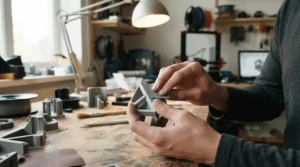
Glass Transition Temperature: Why PLA Goes Soft in a Hot Car
Glass transition temperature is the single most useful number on any filament datasheet, yet most buyers never look at it. Below it, the polymer chains are locked in place and the part feels rigid. Above it, they slide past each other and the part sags, even though it’s nowhere near melting.
Published figures vary slightly by blend. A peer-reviewed materials table indexed on PubMed Central lists ABS at about 105-110°C, PETG at 70-80°C and PLA at 50-80°C. The wide PLA range reflects how additives and crystallinity shift the number. Other guides, including All3DP, put PLA around 55-60°C, PETG near 80-85°C, and ABS near 105°C.
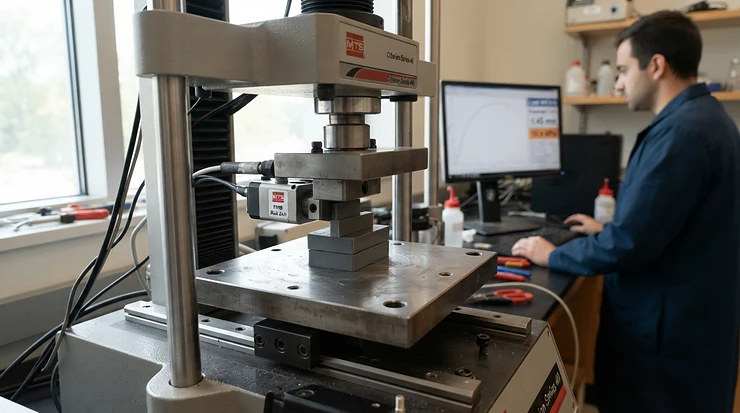
Two practical lessons follow. First, glass transition temperature isn’t a safe operating temperature. All3DP points out that safe working temperatures under load are much lower, because plastics creep before they reach Tg. Treat roughly 10-20°C below Tg as an optimistic ceiling for loaded parts, and more cautious still for anything structural.
Second, Tg also guides your print settings. Bed temperatures are generally set near the Tg of the filament, which explains why PETG likes an 80°C bed and ABS likes 90-100°C. A bed far above Tg softens the first layers and causes elephant’s foot.
Filament for Functional Parts: What Survives Real Life
When people ask for the best filament for functional parts, they usually mean one of three things: it must not snap, it must not sag, or it must not dissolve in the dishwasher. Each plastic wins a different category.
All3DP’s comparison calls PETG an excellent substitute for ABS in functional prints that need durability, impact resistance and moderate temperature resilience. Independent testing cited there shows ABS has much higher impact strength than PETG, though PETG still beats PLA. PLA is stiff and easy to print, but brittle under shock and creeps in warm rooms.
My practical read: choose PETG for snap-fits, brackets, garden clips and bathroom fittings. Choose ABS for parts near heat, like under-desk electronics housings or engine-bay brackets. Choose PLA for jigs, templates and anything that sits indoors at room temperature.
| Option | Cost (one-off) | Heat tolerance | Customisation | Best For |
|---|---|---|---|---|
| Printed PLA | Very low | Low | Excellent | Jigs, display parts |
| Printed PETG | Low | Medium | Excellent | Everyday functional parts |
| Printed ABS | Low-medium | High | Excellent | Warm environments |
| Shop-bought moulded plastic | Medium | Varies | None | Standard sizes |
| Machined aluminium | High | Very high | Good | Structural loads |
This comparison shows why printing wins for one-offs: you get exact fit at a fraction of the cost of machining. For repeatable, load-bearing parts, shop-bought or machined parts still win. Printed ABS closes much of the gap on heat, but remember the layer-line weakness: parts are weaker across layers than along them, so orient prints with the load in mind.
Safest 3D Printer Filament for Home Use
If you only want one answer to the safest 3D printer filament for home use, it’s PLA. The reasoning comes from emissions research rather than a guarantee. HSE-based guidance used by UK universities states to use PLA wherever possible to reduce the risk from fumes and particle emissions.
But “safest” doesn’t mean “emission-free”. UL’s two-year study found PLA and ABS produced roughly equal levels of ultrafine particles, and identified 50 volatile organic compounds including styrene and lactide. Where ABS differs is its chemistry: styrene is a hazardous vapour, and research at CIRI found ABS produced higher particle emissions and higher toxicity than PLA in lung-cell tests. Increasing ABS extrusion temperature and speed raised particle emissions further.
PETG sits in the middle on the evidence, but with a caveat: it’s simply less studied. Treat it as lower-risk than ABS and print it with ventilation anyway.
Food contact is a separate question. All3DP notes that pure PLA, PETG and ABS are food-grade materials, but dyes and additives change the picture, and a rough, layered print surface is hard to clean. For a cookie cutter used once, fine; for daily drinking cups, avoid.
The practical rule for homes with children, pets or small spaces: PLA first, PETG second, ABS only with an enclosure and proper extraction.
Print Enclosure Requirements: Do You Really Need One?
Print enclosure requirements depend on the material. For PLA, none. In fact, a hot enclosure can hurt PLA by softening filament in the heat break, so an open frame with good part cooling is usually better.
For PETG, an enclosure isn’t necessary. Prusa’s PETG guidance says it needs no special hotend or enclosure, and notes PETG has low thermal expansion, so even large models rarely lift from the bed. Add a cardboard draught shield if your room is cold.
For ABS, an enclosure is the norm. Polymaker recommends printing PolyLite ABS on an enclosed printer, because the enclosure traps ambient air and keeps it hot, reducing warping and layer splitting. A UK garage in January is exactly the sort of place where ABS parts crack.
Enclosures also have a safety role. NIH-indexed research found covering the printer halved total particle emissions, and an HSE test found an enclosing hood with filtered ventilation reduced particle emission rates by 97%.
Two warnings. Don’t treat a sealed box as a safe printing solution unless it’s filtered or vented. And never leave a hot, enclosed printer unattended overnight without a smoke alarm nearby. Heat and plastic deserve respect.
Fumes and Ventilation: Keeping Your Air Clean
Fumes and ventilation deserve more attention than they get. The UK Health and Safety Executive’s research RR1146 tested desktop FFF printers with PLA and ABS and found that heated filaments emitted large numbers of very small particles and volatile organic compounds that could be breathed in. The report is careful: more research is required to establish whether real use produces harmful concentrations.
HSE’s control measures are simple and transferable to home use:
- Use a lower nozzle temperature where print quality allows
- Choose filament with a lower emission rate
- Enclose the printer with filtered ventilation
- Wait for emissions to clear before opening the enclosure
For schools, CLEAPSS guidance G276 builds on that research. At home, the workplace COSHH rules don’t apply, but the physics does.
Practical set-up: print in a room you don’t sleep in, crack a window and keep the door closed, and consider a HEPA plus activated carbon filter inside or ducted from an enclosure. Be realistic about filter claims: they reduce exposure but aren’t proof of safety.
Most importantly, stay out of the room during ABS prints. Particle emissions spike during printing, not in the quiet hours afterwards.
Common Mistakes When Buying Filament
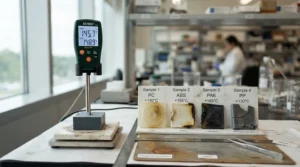
The costliest errors are predictable.
Choosing by colour or price alone. A cheap spool that strings and jams costs more in wasted prints than a premium one.
Ignoring glass transition temperature. A PLA organiser on a car dashboard is the classic way to learn this lesson.
Printing ABS without an enclosure. Cracked layers, curled corners and a smell that lingers.
Printing PETG straight onto smooth PEI or bare glass. It can bond so strongly it pulls chunks from the surface. A thin layer of glue stick acts as a separator.
Buying the wrong diameter. Most consumer printers use 1.75 mm, though some use 2.85 mm. Check your hotend.
Forgetting about moisture. PLA absorbs humidity, and PETG and ABS are rather hygroscopic too. Wet filament pops, strings and weakens.
Treating “PLA+” as a single standard. It’s a marketing label. Each brand’s blend has its own temperatures, so read the spool.
Long-Term Cost & Maintenance
Cost per kilo is no longer the deciding factor between PLA and PETG, since their pricing is almost identical. The real costs are failed prints, enclosure upgrades and filament waste.
Consider a household printing around 3 kg a year. The difference between a £14 spool and a £25 spool is about £33 annually. A single failed 12-hour ABS print on the wrong settings costs more in wasted time than that. Paying a little more for consistent diameter, as with Prusament PETG, can be the cheaper option if it cuts jams.
ABS has hidden costs: an enclosure, extraction, and extra energy for a hot bed. If you don’t already own those, Polymaker PolyLite ABS costs far more than its spool price suggests.
Maintenance is mostly about moisture. Store opened spools in airtight boxes with silica gel, and dry filament that pops or strings. Prusament PETG isn’t abrasive, so a brass nozzle lasts, which keeps running costs low.
Practical Usage Guide: Your First 30 Days
Here’s a straightforward plan for a new owner.
Week 1: PLA only. Use eSUN PLA+ at around 210°C and a warm bed, as suggested by the independent report above. Print calibration cubes, a temperature tower and one useful object.
Week 2: Dry and store. Set up an airtight container with silica gel. Weigh spools if you want to track usage.
Week 3: Try PETG. Start from the manufacturer’s profile, such as Prusa’s 250°C nozzle and 80°C bed for Prusament PETG. Use glue stick on smooth surfaces. Expect strings, then tune retraction and temperature. A heat gun can clear stray strands.
Week 4: Only now consider ABS. Check your enclosure, ventilation, smoke alarm and a safe spot. Start from Polymaker PolyLite ABS guidance: enclosed printer, hot bed, no draughts.
Common first-month mistakes: raising nozzle temperature to fix everything, skipping bed levelling, and printing with damp filament.
Real-World Scenarios: Three Buyers, Three Filaments
The student in a shared flat. Budget under £40 for filament, one small room, printing weekly. Choose PLA, specifically eSUN PLA+, and keep the window open. Prototypes, phone stands and desk organisers don’t need more heat tolerance, and the lower fumes profile suits shared space.
The homeowner fixing things. A garage or utility room, printing monthly: bathroom shelf brackets, garden hose clips and replacement knobs. Choose PETG. Amazon Basics PETG is the thrifty option, while Prusament PETG suits parts that must fit exactly. PETG’s roughly 80°C Tg and low moisture absorption cover bathrooms and kitchens.
The hobbyist with a car project. A fully enclosed printer, weekly printing, parts near warm components. Choose ABS, either Polymaker PolyLite ABS for lower odour or eSUN ABS+ for budget warp resistance. Run the printer in a ventilated space, stay out during prints and wait before opening the enclosure.
Notice the pattern: nobody needs all three plastics at once. Match the material to the room and the job.
FAQ
❓ Can you mix PLA, PETG and ABS on the same printer?
❓ Does PETG need a hardened nozzle?
❓ Can ABS be smoothed with acetone?
❓ Is PETG good enough for outdoor parts?
❓ How should I store opened filament?
Conclusion
The honest verdict on PLA vs PETG vs ABS is that you don’t need to pick a winner. You need to pick a job.
PLA is the friendly one: low temperatures, low warping and the lowest fumes concern of the three, though it still emits particles, so ventilate. PETG is the reliable all-rounder, tougher than PLA, with a Tg near 80°C and no enclosure required. ABS is the specialist: roughly 105°C glass transition temperature and strong impact resistance, paid for with an enclosure, a hot bed and serious attention to fumes and ventilation.
If you’re starting out, buy eSUN PLA+ and learn the basics. When something needs to be tougher or live somewhere damp, step up to Prusament PETG or Polymaker PETG. Reserve Polymaker PolyLite ABS or eSUN ABS+ for parts that truly face heat, and only once your printing space is ready.
Whatever you choose, remember the three questions: how hot, how tough, and how safe for the room it’s printed in?
Recommended for You
- 1.75mm Filament Multipack: 7 Best Bundles For UK Makers (2026)
- 3D Printer Filament Under £15 per Kg: 7 Best UK Buys (2026)
- PCL Filament Refills For 3D Pens: 7 Safest Picks UK (2026)
Disclaimer: This article contains affiliate links. As an Amazon Associate, I earn from qualifying purchases. If you purchase products through these links, we may earn a small commission at no additional cost to you.
✨ Found this helpful? Share it with your friends! 💬🤗
