In This Article
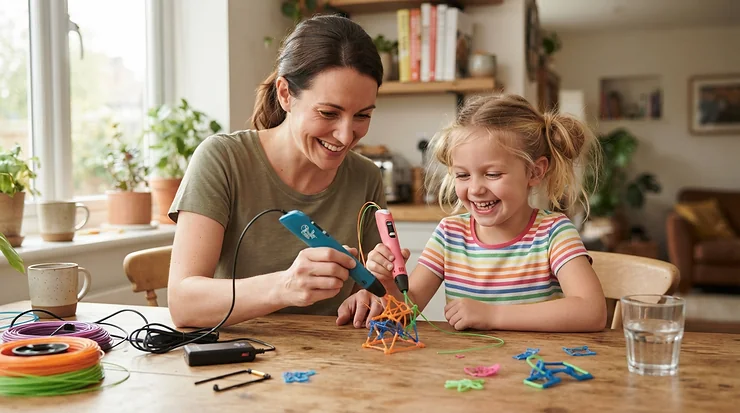
Picture a rainy Sunday somewhere in Manchester. The felt tips have dried out, the Lego has collapsed into a pile of regret, and a nine-year-old wants to make something that stands up off the page. That’s the sweet spot for a 3D pen for kids: a handheld gadget that melts a thin strand of plastic and lets children draw in the air. Flat doodles become wobbly Eiffel Towers, dinosaurs and very ambitious phone stands.
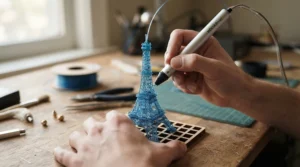
Here’s the catch. Not every 3D pen for kids deserves the label. Some child-focused pens are rated to a tip temperature of around 65°C and are designed to be touched. Others heat to 180-240°C and carry a “14+” warning in the manual. The photo on the box, a smiling child, looks identical either way.
This guide separates the genuinely child-appropriate options from the teen-and-adult tools. Everything below rests on spec comparisons, manufacturer age grading and published reviews, not claims of hands-on testing. We cover seven real pens, with honest analysis of who each one suits. Along the way you’ll find the safest 3D pen for children, a plain-English explanation of low-temperature filament safety, a checklist for any 3D pen starter kit for kids, and practical rules for parental supervision that keep creative play fun rather than frantic.
A note on prices: they shift constantly, so every figure below is a range. Always check current price and age grading on the listing before buying.
What Is a 3D Pen for Kids?
A 3D pen for kids is a handheld extruder that melts a thin plastic strand and lets a child draw solid, three-dimensional shapes. Child-focused models use low-temperature filament, usually polycaprolactone (PCL) or a brand’s own eco-plastic, so the nozzle runs far cooler than a standard pen. That cooler running lowers burn risk during creative play.
The material matters more than the marketing. Polycaprolactone is a biodegradable polyester that melts at roughly 60°C, while standard PLA filament needs around 160-210°C and ABS needs 210-235°C. In practice, that gap is the difference between “warm to the touch” and “instant blister”.
A good 3D pen for kids also bundles the boring-but-vital extras: a comfortable grip, a simple one-button start, stencils, and a sensible auto-shutoff. Think of it as a hot glue gun that went to art school and learned some manners.
Quick Comparison: 7 Best 3D Pen for Kids at a Glance
| Pen | Age guide | Heat type | Power | Best For |
|---|---|---|---|---|
| 3Doodler Start+ Essentials | 6-13 | Tip rated up to 65°C, proprietary eco-plastic | Rechargeable, cordless | Ages 6-9, absolute first-timers |
| MYNT3D Junior2 | 6+ | Low-temperature, PCL only | Battery, micro USB charging | Budget-conscious low-temperature starter |
| SCRIB3D Jr. | 6+ | Low-temperature, PCL only | Rechargeable | Small hands and stencil projects |
| myFirst 3dPen Make | 5-13 | Low-heat PCL, 2 temperature levels | Built-in rechargeable battery | Younger kids who’ll grow into more control |
| SCRIB3D P1 | UK retailer lists 14+ | PLA 160-210°C, ABS 210-235°C | Mains adapter | Teens, with supervision |
| 3Doodler Flow | 14+ | Adjustable, up to 240°C | Corded or power bank | Serious teen makers |
| Polaroid Play+ | 14+ (per Polaroid’s Play guide) | PLA, roughly 180-200°C | Corded | Older teens and gifting |
The table shows a clear split. The first four pens are built for primary-age children and run cool, while the last three are teen-and-up tools with real heat. If your child is under 12, the 3Doodler Start+ Essentials, MYNT3D Junior2, SCRIB3D Jr. and myFirst 3dPen Make are the only realistic contenders. The SCRIB3D P1, 3Doodler Flow and Polaroid Play+ earn their place as the “what comes next” tier.
💬 Just one click — help others make better buying decisions too!😊
Top 7 3D Pen for Kids: Expert Analysis
1. 3Doodler Start+ Essentials — cool-running tip for first-time makers
The standout feature is the tip. 3Doodler rates the maximum extruder temperature at 65°C and describes the design as having no external hot parts, which is why this is often the first stop in any search for a 3D pen for kids.
The recommended age is 6-13. It uses proprietary 2.5mm eco-plastic strands, with one speed and one temperature setting. That means no menus and no settings to get wrong, but also no room to grow. The kit lists a USB charge cable, 72 strands and an activity guide, and the plastic hardens fast enough for kids to build upright.
Based on the spec comparison, this is the safest 3D pen for children aged 6-9 and a smart pick for shared family use. The catch is the plastic: standard 1.75mm filament won’t fit, and at least one refill maker states that its filament doesn’t suit the Start pen.
Reviewers consistently note that it stays cool through long sessions. A recurring reservation is that it isn’t the cheapest option around. One UK roundup named it best overall, though we couldn’t independently verify the underlying review data.
Pros:
- ✅ Tip rated to 65°C, built for ages 6-13
- ✅ Single setting, nothing to misconfigure
- ✅ Toy-safety certifications listed by the brand
Cons:
- ❌ Proprietary refills limit colour choice
- ❌ Older kids may outgrow the single speed
Price: typically in the £30-£45 range at the time of research. Verdict: excellent value for safety-first families.

2. MYNT3D Junior2 — budget low-temperature pen with a sealed nozzle
The sealed nozzle is the hook. It uses the same clog-resistant design as MYNT3D’s more advanced pens, and clogs are what end most children’s enthusiasm within a fortnight.
It’s designed for ages 6 and up and is battery powered, charging by micro USB (the AC adapter isn’t included). It runs on 1.75mm PCL only and isn’t compatible with ABS or PLA. Treat that restriction as a safety feature, because a hot filament simply can’t be loaded by mistake. The kit includes three PCL rolls, starter stencils and a USB cable. Because PCL comes in the standard 1.75mm size, third-party refills are easy to find.
Here’s what to weigh: this is a low-temperature 3D pen for kids with real filament freedom within the PCL family. It lacks the brand-backed ecosystem of a 3Doodler Start+ Essentials, but it gives you a cheaper, more flexible refill route.
One 2026 kids’ roundup reported smooth PCL flow with no noticeable odour, and praised the sealed design against clogs. Independent UK review volume was hard to verify.
Pros:
- ✅ Low-temperature nozzle designed for ages 6+
- ✅ Sealed nozzle helps prevent clogs
- ✅ Standard 1.75mm PCL refills are widely sold
Cons:
- ❌ Not compatible with PLA or ABS
- ❌ Charger plug not included in the box
Price: generally in the £25-£40 range. Verdict: the sensible budget low-temperature option.
3. SCRIB3D Jr. — compact shape built for smaller hands
Its standout is ergonomics. The body is shaped for smaller hands, which matters more than any spec when a seven-year-old’s grip is the limiting factor.
An editorial review describes it as suitable for ages 6 and up. The kit includes a USB cable, three spools of filament, a quick-start guide and a stencil guide with five projects. It only accepts low-temperature PCL, which the same review says keeps the nozzle and plastic cool to the touch. It needs charging before first use, so don’t promise the birthday child instant gratification.
Analytically, the SCRIB3D Jr. sits between the MYNT3D Junior2 and the 3Doodler Start+ Essentials: PCL freedom like the former, with a more structured project guide like the latter. It’s a strong pick if “fits the hand” is your main worry.
The editorial review rated it 4 out of 5. Verified consumer review volume was limited, so treat the score as one data point rather than a consensus.
Pros:
- ✅ Shaped for small hands and young grips
- ✅ Includes three spools and five stencil projects
- ✅ PCL-only operation keeps heat low
Cons:
- ❌ Must be charged before first use
- ❌ Limited verifiable review data
Price: typically in the £30-£40 range; check current price and stock on amazon.co.uk. Verdict: good fit for smaller hands.
4. myFirst 3dPen Make — two-level heat control for growing skills
The standout is flexibility without exposing a child to a hot pen. It’s designed for ages 5-13 and uses 1.75mm PCL, with two speed levels and two temperature levels.
That dual setting is the clever bit. A five-year-old can stay on the lower setting while a ten-year-old gets smoother flow on the higher one. Retailer listings describe the heat as contained inside the mechanism, with a cool-touch exterior. The pen has a built-in rechargeable battery, so there’s no cable dragging across the craft table. The standard kit lists nine PCL colours of 3m each, a thermoplastic sheet, design templates, stickers, a USB cable and a manual.
The caveat is that an adjustable setting needs adult oversight: choose the temperature for your child, not the other way round. As a 3D pen starter kit for kids, the bundled templates and thermoplastic sheet add genuine creative range.
We couldn’t verify a large pool of independent UK reviews, so the case rests on specs and retailer descriptions. Irish retailers list it at around €60 including VAT, which suggests the UK range below.
Pros:
- ✅ Wide 5-13 age range
- ✅ Two speed and two temperature levels
- ✅ Wireless with a built-in battery
Cons:
- ❌ Adjustable heat needs adult setting
- ❌ Few independent reviews to confirm durability
Price: roughly £40-£60. Verdict: best for families wanting a pen that lasts several years.
5. SCRIB3D P1 — popular teen step-up, not a first pen
It earns its place through control. The LCD temperature display and stepless speed slider give teens the “real tool” feeling that cheaper pens lack.
The P1 handles PLA at 160-210°C and ABS at 210-235°C, with a ceramic nozzle and a two-minute auto-sleep. It’s FCC, CE and RoHS certified and runs from a mains adapter. Age guidance conflicts across sources: Smyths lists 14+, one review says the box states adult use, and third-party sites claim 8+. When specs disagree, trust the packaging and the cautious UK retailer.
One reviewer found the tip became very hot within 5-10 minutes at default settings and recommended adult use only, though dropping to the low end of the PLA range helped. That’s useful, honest data: this is the pen to graduate to, not to start with.
Pros:
- ✅ LCD shows the actual temperature
- ✅ Stepless speed slider for fine control
- ✅ Standard 1.75mm PLA and ABS refills
Cons:
- ❌ Tip gets very hot in extended use
- ❌ Mains-powered, so less portable
Price: roughly £25-£40. Verdict: solid value for supervised teens, wrong for primary-age children.
6. 3Doodler Flow — adjustable precision for serious teen makers
The standout is adjustable temperature and standard filament compatibility. It works with 1.75mm PLA and ABS, with +/- buttons to match the heat to the material.
Listings give a maximum tip temperature of 240°C and a minimum age of 14. 3Doodler’s own UK site says it suits 14 and over because of the heat and the exposed interchangeable nozzles, which is about as clear as manufacturers get. There’s no internal battery; it can run from a portable power bank, though not every bank is compatible. Refills sit around the £20 mark for a box.
Our analysis: the 3Doodler Flow is a creative tool for older teenagers, and its inclusion shows where the child-friendly category stops. Pair it with a 3Doodler Start+ Essentials at home if you have both a nine-year-old and a fifteen-year-old, and keep the Flow out of the younger child’s reach.
We couldn’t verify a broad independent review pool; the brand’s refill pages show only small review counts.
Pros:
- ✅ Adjustable temperature for PLA and ABS
- ✅ Uses standard 1.75mm filament
- ✅ Spool-based feed for steady flow
Cons:
- ❌ Designed for ages 14+ only
- ❌ Needs a cable or compatible power bank
Price: roughly £50-£75; check current price. Verdict: premium teen tool, not a children’s pen.
7. Polaroid Play+ — photo-brand pen with a stand and PLA range
The standout is the accessory ecosystem. The Play+ includes a pen stand and is described as compatible with Polaroid’s PLA, silk, multi-colour, glow-in-the-dark and wood-effect filaments.
Polaroid’s quick-start guide for the original Play model warns that parts reach roughly 180-200°C, says the product is “not a toy” and grades it 14+. The Play+ listings describe it as suitable for adolescents and adults. A review of the original Play found it cheap and fun but limited to PLA.
That makes it a useful reality check. A famous brand and a friendly design don’t make a pen suitable for a seven-year-old. Based on the spec comparison, it’s a decent gift for a mature teenager and a poor choice as a first Polaroid Play+ for anyone younger.
Independent review data for the Play+ specifically was thin, so the points below draw on the original Play’s guidance.
Pros:
- ✅ Pen stand included for safer resting
- ✅ Works with several PLA filament styles
- ✅ Recognisable brand with app-supported templates
Cons:
- ❌ Roughly 180-200°C working heat
- ❌ Explicitly not a toy for under-14s
Price: roughly £25-£45. Verdict: teens only, and only with sensible rules.
Top 7 Specs and Value Compared
| Pen | Filament | Cordless? | Kit highlights | Price range | Best For |
|---|---|---|---|---|---|
| 3Doodler Start+ Essentials | Proprietary eco-plastic | Yes | 72 strands, activity guide | £30-£45 | Safety-first beginners |
| MYNT3D Junior2 | 1.75mm PCL | Yes | 3 rolls, stencils | £25-£40 | Low-cost refill flexibility |
| SCRIB3D Jr. | 1.75mm PCL | Yes | 3 spools, 5 projects | £30-£40 | Small hands |
| myFirst 3dPen Make | 1.75mm PCL | Yes | 9 colours, templates, sheet | £40-£60 | Long-term growth |
| SCRIB3D P1 | PLA / ABS | No | 3 PLA colours, stencil guide | £25-£40 | Supervised teens |
| 3Doodler Flow | PLA / ABS | Power bank only | Spool-based, adjustable heat | £50-£75 | Advanced teens |
| Polaroid Play+ | PLA family | No | Pen stand, templates | £25-£45 | Gifting to older teens |
The cheapest pens aren’t automatically the best value, because the myFirst 3dPen Make costs more but bundles more variety. If refills matter, the MYNT3D Junior2 and SCRIB3D Jr. use standard 1.75mm PCL, while the 3Doodler Start+ Essentials ties you to one brand. Teen-tier pens cost similar upfront, but they need more supervision and often more accessories.
How to Choose a 3D Pen for Kids
Here’s how to pick a 3D pen for kids in seven steps, with the reasoning behind each:
- Start with the age on the box, not the photo. Manufacturers grade by risk, so a pen graded 14+ is telling you something about heat and exposed parts.
- Check the tip temperature. Under about 70°C is the realm of true child pens, whereas 160°C and above is burn territory.
- Confirm the filament type. PCL-only pens physically prevent hot-filament mix-ups, which is a quiet safety win.
- Look at the power source. Cordless pens avoid trailing cables on small craft tables, though mains pens give steadier heat.
- Count what’s in the kit. A strong 3D pen starter kit for kids bundles several colours, stencils, a mat and a charger.
- Plan the refill route. Standard 1.75mm filament is cheaper to replace than proprietary strands.
- Look for UKCA or CE marking and clear instructions. Toys on the GB market need conformity marking, so missing paperwork is a red flag.
Notice what isn’t on the list: LCD screens, app connectivity, or “professional” branding. For primary-age children, those add risk or complexity without adding fun.
Safest 3D Pen for Children: What “Safe” Really Means
The phrase “safest 3D pen for children” gets thrown around freely, so let’s define it. Safe is a combination of low tip temperature, appropriate age grading, safe materials, and proper regulatory marking, not any single feature.
Heat comes first. A pen that tops out at around 65°C, like the 3Doodler Start+ Essentials, or runs PCL at low temperatures, like the MYNT3D Junior2, drastically reduces burn risk compared with 180°C+ tools. That doesn’t make it harmless, because 65°C is still warm, but it’s the difference between discomfort and injury.
Regulation comes second. Toys supplied in Great Britain fall under the Toys (Safety) Regulations 2011, which require a safety assessment, conformity marking such as UKCA, and a declaration of conformity. CE marking has remained accepted for many products in Great Britain, though rules evolve, so check current guidance. A pen labelled “not a toy” or 14+, like the Polaroid Play+, sits outside the children’s category by the maker’s own description.
Third, check materials. Look for non-toxic, BPA-free filament claims, ideally backed by listed certifications, as the 3Doodler Start+ Essentials listing provides.
In short, the safest 3D pen for children is the one whose heat, age rating and paperwork all point the same direction, and for under-10s that points firmly at the low-temperature models.
Low-Temperature 3D Pen for Kids vs Hot Pens
Why choose a low-temperature 3D pen for kids at all? Because the physics is on your side. PCL melts near 60°C, so the pen never needs the 160-235°C that PLA and ABS demand.
| Feature | Low-temperature pen (PCL / eco-plastic) | Hot pen (PLA / ABS) | Traditional craft supplies |
|---|---|---|---|
| Typical working heat | Roughly 60-70°C | 160-235°C | None |
| Burn risk | Low | High | Very low |
| Filament flexibility | Limited to PCL or brand plastic | Wide choice | N/A |
| Strength of finished model | Softer, bends more | Harder, more durable | Varies |
| Best For | Ages 5-12, creative play | Teens, supervised | Younger children, mess-friendly play |
Examples: the MYNT3D Junior2 and SCRIB3D Jr. belong in column one, while the SCRIB3D P1 and 3Doodler Flow sit in column two.
The trade-off is real. Low-temperature models give you cooler, safer play but softer, more flexible finished models. Hot pens give stronger results at the cost of real burn risk. For children under about 12, the safety gain clearly outweighs the durability loss. For older teens the balance tips the other way, provided adults are nearby.
Low-Temperature Filament Safety: Handling, Storage and Fumes
Low-temperature filament safety isn’t just about the nozzle. It’s about what happens before, during and after drawing.
During use, PCL and brand eco-plastics are marketed as non-toxic and biodegradable, but “non-toxic” doesn’t mean “edible”. Offcuts and strands are small-parts hazards for younger siblings. One listing even carries a choking-hazard warning for small parts, so keep scraps away from toddlers.
For storage, remember that PCL softens near 60°C. A filament roll left on a sunny windowsill or in a hot car can warp, which means low-temperature filament safety extends to simple storage habits: cool, dry, boxed.
For ventilation, stick to PCL and PLA for children. Several guides warn that ABS can release styrene fumes and needs proper ventilation, so it’s one more reason the hot, ABS-capable pens belong with older teens.
Finally, never mix filament types. Loading PLA into a PCL pen may damage it, and low-temperature filament safety rules say the same in reverse: never force a hot-temperature filament into a pen not built for it. Treat the manual as gospel, wash hands after drawing, and bin offcuts promptly.
3D Pen Starter Kit for Kids: What Should Be in the Box
A 3D pen starter kit for kids should do one job: get a beginner from unboxing to a finished model within an hour. The best kits therefore bundle more than the pen.
Here’s the checklist I’d weigh:
- Filament quantity (in metres, not rolls). The myFirst 3dPen Make kit lists nine colours at 3m each, while the SCRIB3D Jr. includes three spools.
- Stencils or an activity guide. The 3Doodler Start+ Essentials includes a guide, and the SCRIB3D Jr. includes five projects.
- Charging gear. The MYNT3D Junior2 needs you to supply a plug, so check this before gifting.
- A drawing mat. Some bundles include a mat or thermoplastic sheet; others don’t, and a silicone baking mat works as a stopgap.
The best 3D pen starter kit for kids is rarely the cheapest. A £25 pen that needs £15 of extras costs more than a £40 bundle with everything inside. Add up what you’ll actually need before comparing sticker prices.
Parental Supervision: A Practical Playbook for Parents
Even the safest pen needs parental supervision, and here’s what that looks like day to day.
For ages 5-8, stay in the room for every session. For ages 9-12, check in regularly and stay within earshot. For 14+ pens, treat supervision as a first-month rule: watch the heat-up, the loading and the cool-down.
Some ground rules work across the board:
- The adult picks the temperature setting, particularly on adjustable models like the myFirst 3dPen Make.
- Draw on a mat or tray, never on the sofa or a carpet.
- Pen down, pen off. Train the habit of switching off whenever the pen leaves their hand.
- Cool-down before storage. Even low-temperature pens should rest before boxing.
- Charge in view. Rechargeable pens contain lithium-ion batteries, so charge them where you can see them, not overnight under a pillow.
Good parental supervision is lighter than it sounds. It means being present, not hovering, and it means involving children in the rules so the pen becomes a shared responsibility rather than a forbidden gadget.
Creative Play: Projects That Build Skills
Creative play is where a 3D pen for kids earns its keep. Good projects scale with age and patience.
For ages 5-7, start with flat-to-upright stencils: a star that stands up, a bookmark, a simple animal outline. The 3Doodler Start+ Essentials and SCRIB3D Jr. both ship with stencil guides for exactly this stage.
For ages 8-10, try keyrings, name tags and small figures. A MYNT3D Junior2 with a few PCL colours is plenty. For 11-13, move to freehand structures: bridges, miniature furniture, phone stands.
What are kids actually learning? Spatial reasoning improves when children have to imagine how a flat line becomes a rising wall, and fine-motor control improves with every steady extrusion. It’s also genuinely screen-free creative play, a big selling point for parents trying to balance tablets.
Keep sessions to 20-30 minutes, ask what they plan to build before they start, and display the results. Children who see their models on the shelf stay interested for months.
Setup and Maintenance Guide: Your First Week and Beyond
A little routine prevents most problems. Here’s a simple first-week plan.
Day 1: Charge and read. Fully charge cordless pens and read the safety card together. The SCRIB3D Jr. needs charging before first use.
Day 2: Load and warm up. Insert filament only when the pen reports ready. Heat-up takes roughly 10-30 seconds on child pens, depending on the listing.
Day 3: Practice lines. Draw straight lines, then circles, then a flat shape. Mastering flow beats attempting a dragon.
Days 4-7: Short projects. Try one stencil per session.
Ongoing: unload filament before storing, wipe the nozzle area once cool, keep refills boxed and cool, and charge only with the supplied cable.
Common mistakes in the first 30 days include forcing filament when it jams, pulling plastic out mid-heat, and leaving the pen switched on between projects. Most children’s models include auto-sleep or standby, but don’t rely on it as the only safety net.
Problem and Solution Guide: Fixing the Everyday Annoyances
Problem: the nozzle clogs. Unload the filament while warm, cut off the kinked end and reload a clean strand. Sealed nozzles like the MYNT3D Junior2‘s reduce this, but don’t eliminate it.
Problem: shapes droop. The plastic isn’t setting fast enough. Draw smaller sections, pause between layers, or switch to the lower speed.
Problem: the battery fades mid-project. The 3Doodler Start+ Essentials is described as running for roughly 45-60 minutes per charge in earlier listings, so plan 30-minute sessions and charge between.
Problem: filament sticks to the table. Always use a mat or silicone sheet.
Problem: a minor burn. It can happen even with low-temperature pens. Follow NHS guidance on burns and scalds: cool the burn under cool or lukewarm running water for 20 minutes, don’t use ice or creams, and seek medical attention for young children or if the burn is large, deep or on the face or hands.
Real-World Scenarios: Matching a Pen to Your Family
Scenario 1: the seven-year-old and the rainy weekend. Budget around £35, used twice a week at the kitchen table. The 3Doodler Start+ Essentials gives the lowest heat and the least fuss, though if refills worry you, the MYNT3D Junior2 is the cheaper alternative.
Scenario 2: two siblings, ages 8 and 11, sharing. Budget around £50, used on weekends. The myFirst 3dPen Make lets you set a lower temperature for the younger child and a higher one for the older, while the included templates keep both occupied. Schedule turns to avoid arguments.
Scenario 3: a fourteen-year-old into cosplay props. Budget £60-£80, used several evenings a week in a bedroom. A 3Doodler Flow or SCRIB3D P1 gives the strength and finish teens want. Agree ground rules first: a heat-proof mat, a cool-down habit and adult visibility.
Notice the pattern. Younger children need safety and simplicity; older ones need control and durability. Matching the pen to the child, not the other way round, is the real secret.
Long-Term Cost and Maintenance
The pen is only the opening bid. Refills decide the total cost.
Proprietary systems, like the 3Doodler Start+ Essentials, make refills a brand-locked purchase. Standard 1.75mm PCL, as used by the MYNT3D Junior2 and SCRIB3D Jr., opens up third-party bulk packs. PLA pens like the SCRIB3D P1 have the widest filament market of all, with refills available in dozens of colours.
Think in cost per metre, not cost per roll. A kit with 27 metres across nine colours, as in the myFirst 3dPen Make, may beat a cheaper pen with 9 metres. Add battery life: a rechargeable cell that fades after a year may force an earlier replacement, so a modest warranty period counts as part of the value.
Finally, think about hand-me-downs. A low-temperature pen can serve a younger sibling for years, spreading the cost. Even so, don’t buy filament in bulk before your child’s interest is proven.
FAQ
❓ Is a 3D pen worth buying for a seven-year-old?
❓ Can I use PLA refills in a low-temperature 3D pen for kids?
❓ How long does a 3D pen starter kit for kids last before refills?
❓ Do I need to stay in the room during use?
❓ Where can I buy a safe 3D pen for kids in the UK?
Conclusion
Here’s the short version. For children under 10, a low-temperature pen is the only sensible choice, and the 3Doodler Start+ Essentials is the strongest all-round pick for safety-first families. If you want cheaper, standard-size refills, the MYNT3D Junior2 and SCRIB3D Jr. are well-judged alternatives, with the SCRIB3D Jr. edging ahead for small hands. For families who want a pen that grows with a child, the myFirst 3dPen Make offers two heat levels and a richer kit.
The SCRIB3D P1, 3Doodler Flow and Polaroid Play+ are better understood as teen tools. They’re capable and fun, but reviewer data and manufacturer guidance both say the heat needs adult awareness.
Whatever you choose, remember the three pillars: match the pen to the age on the box, keep parental supervision part of the routine, and treat low-temperature filament safety as a daily habit rather than a one-time read of the manual. Do that, and a 3D pen for kids becomes what it should be: a screen-free invitation to build, imagine and make a delightful mess of plastic squiggles.
✨ Ready to start building?
🔍 Browse the carefully selected pens above and click any highlighted product name to check current pricing and availability on amazon.co.uk. Pick the right pen for your child’s age, set up your supervision rules, and get ready for a house full of tiny plastic masterpieces! 🎨🚀
Recommended for You
- 3D Printer For Print-on-Demand Business: 7 Proven Picks (2026)
- 3D Printer For Small Business: 7 Reliable Picks For UK Firms (2026)
- 3D Printer For Schools: 7 Best Picks For UK Classrooms (2026)
Disclaimer: This article contains affiliate links. As an Amazon Associate, I earn from qualifying purchases. If you purchase products through these links, we may earn a small commission at no additional cost to you.
✨ Found this helpful? Share it with your friends! 💬🤗
